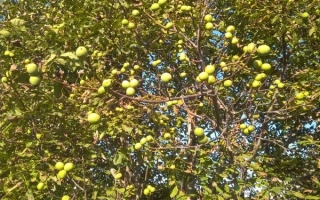
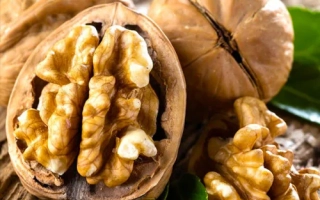
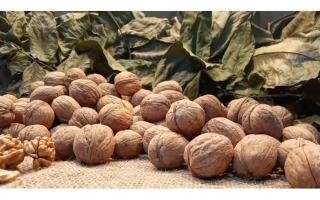
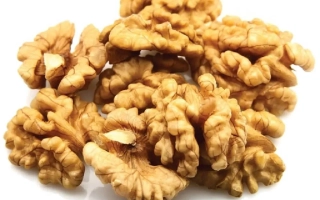
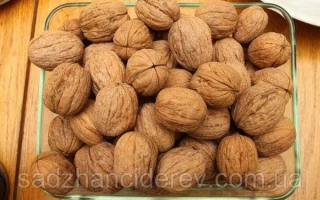
The Kostyuzhensky hazelnut variety is a high-yielding selection recommended for industrial cultivation. Trees of this variety are medium-sized, reaching a height of up to 8 meters, with a rounded, elongated crown. Flowering occurs late: male flowers open from May 5 to 11, while female flowers bloom from May 15 to 23. The vegetation period lasts approximately 165 days. The variety has moderate cold resistance, and fruiting may be irregular. Kostyuzhensky is also an excellent pollinator for other varieties, especially effective when paired with the Skino variety. Grafting is performed using the improved cleft grafting method. The Kostyuzhensky variety produces large nuts weighing from 14 to 15.5 grams, with a round, uniform shape, low edges, and a semicircular light-brown apex. The shell has medium density, separates and splits easily, facilitating kernel extraction. The kernel is large, white with a yellowish tinge, covered by a thin straw-yellow film, and constitutes more than 50% of the nut's total weight. It is oily, sweet, and aromatic, making the nut popular in culinary applications for preparing various dishes and confectionery items such as cakes, pies, muesli, and salads. The kernel contains 70% fat, indicating high nutritional value. For successful cultivation of this variety, it is recommended to use growth stimulators and fertilizers such as Kornevin, Osmocote, and humates during planting, as well as regular pruning and protective treatments against pests and diseases using agents including copper sulfate, Horus, Twix, Aktofit, and others. The Kostyuzhensky hazelnut is valued for its high yield, disease resistance, and beneficial properties, including improved cardiovascular function, reduced cholesterol levels, and enhanced immunity, making it a popular choice among gardeners and farmers in Ukraine and CIS countries.