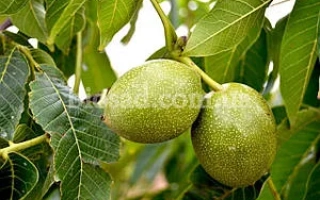
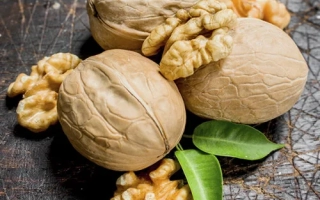
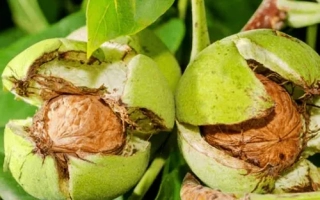
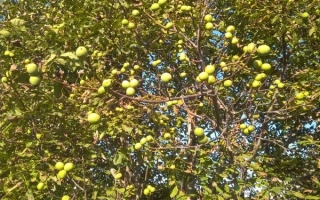
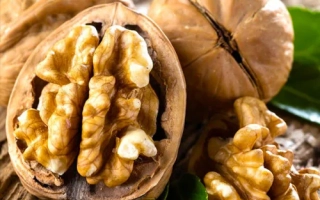
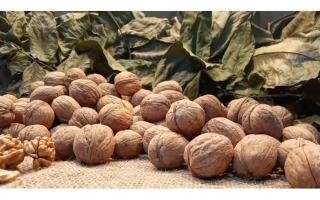
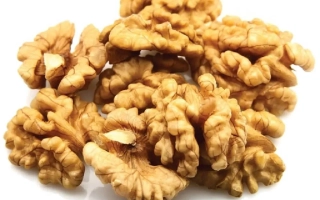
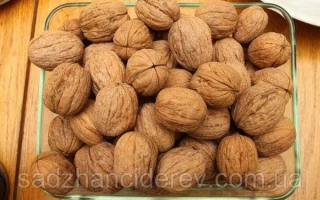
The INTR walnut variety is a medium-sized tree with a pyramidal crown, reaching heights of 3 to 10 meters depending on conditions and pruning. The tree grows rapidly in its youth, but growth slows during fruiting. Leaves are elongated with smooth edges and a matte green color. Flowering begins in April–May, and fruiting occurs in mid-September to early October, making the variety early-bearing and attractive for intensive horticulture. INTR nuts are notably large — weighing approximately 20 grams, and according to some data, up to 40–60 grams, significantly exceeding the size of standard walnuts. The nuts have an elongated oval shape with a high kernel yield, exceeding 40%, and a light-colored kernel that easily separates from the shell. The fruiting type is lateral or superlateral, with a high number of fruit buds per branch, ensuring high productivity — up to 3.5–4 tons per hectare or about 40 kg per tree. The INTR variety is resistant to various weather conditions and diseases, including brown and black spot diseases, as well as marsoniosis. It does not require cross-pollination due to parthenocarpy and protogyny. Nuts grow well on sunny sites with moderate humidity and loamy carbonate soils, but can tolerate partial shade. Due to its characteristics, the variety is widely used in intensive commercial orchards and is recommended for planting with spacing of 6–8 meters between trees.