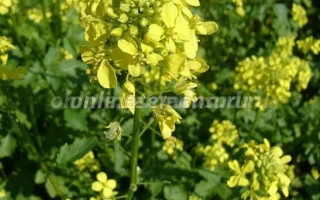
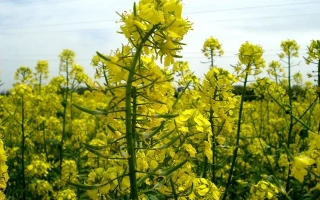
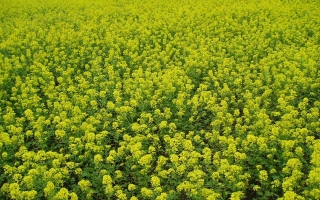
The "Ruslana" white mustard variety is a diploid, erucic acid-free culture intended for cultivation as an oilseed, cover crop, and honey plant. The seeds of this variety are characterized by high density: the mass of 1000 seeds ranges from 5.0 to 5.4 grams, and the fat content reaches 24–29 %. The internal composition of the oil includes allyl alcohol (from 0.07% to 0.27%) and erucic acid in the range of 0.5–1.0%, which ensures good oxidation stability and imparts a characteristic aroma to the mustard.
The plants reach a height of about 100 cm, have a dense structure with a large number of side branches, which contributes to high yield. The vegetative period ranges from 70 to 88 days, depending on climatic conditions. Seed yield varies from 16.6 to 29 quintals per hectare, and green mass reaches 219–220 tons per hectare. High resistance to lodging and shattering allows "Ruslana" to be used in mechanized harvesting without loss of quality.
The variety is characterized by early flowering and uniform ripening, which simplifies harvest planning and increases equipment utilization efficiency. The meal after seed processing is suitable for producing table mustard, and the green mass is rich in calcium, phosphorus, and carotene, making it valuable animal feed. Thanks to resistance to major pathogens and pests, "Ruslana" ensures a stable yield even in unfavorable conditions.