


SKU #48543
·
74 views
Clover Klondike
Clover
DLFUser rating
0 votes0% positive reviews
No ratings yet — be the first.
Usage Type
Lawn, Pasture
Root System Type
Fibrous
Sowing Rate (kg/ha)
10-12
Variety Characteristics
Rapid regrowth, Resistant to trampling, Good for bees
Prices in stores
from15.13 €per 1 kg
pack from 15.13 € per 1 kg
1 offer from 1 store
Store offers · 1 from 1 stores
Prices are updated on loadLoading offers…
Available at: Record Agro
Aggregator catalog: prices are collected automatically from store websites, normalized by AI and converted at the current exchange rate. Before ordering, confirm the price and availability on the store's website. This block is not indexed by search engines — the data is loaded after the page opens.
About product

White Clover of the Klondike variety is a perennial plant with an upright stem and medium- or large-leaved foliage. Due to its structure, it competes successfully in mixtures with tall grasses, making it an excellent choice for lawns, pastures, and ornamental plantings. The plant is early-maturing, quickly regrows after mowing, and provides uniform summer productivity. Its root system is fleshy an…
Usage Type
Lawn, Pasture
Root System Type
Fibrous
Sowing Rate (kg/ha)
10-12
Variety Characteristics
Rapid regrowth, Resistant to trampling, Good for bees
Description
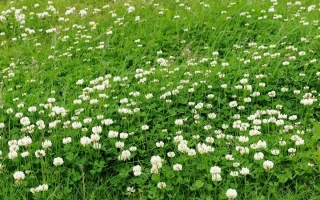
White Clover of the Klondike variety is a perennial plant with an upright stem and medium- or large-leaved foliage. Due to its structure, it competes successfully in mixtures with tall grasses, making it an excellent choice for lawns, pastures, and ornamental plantings. The plant is early-maturing, quickly regrows after mowing, and provides uniform summer productivity. Its root system is fleshy and branched, and the stems spread along the soil surface, rooting at the nodes, which promotes rapid recovery after damage.
Klondike has high resistance to drought, frost, and trampling, making it low-maintenance and reliable under various climatic conditions. It does not tolerate strong shade and prefers open, sunny locations. Flowering begins in the second year after sowing and continues from May to October, ensuring a prolonged honey collection period. Nectar productivity reaches 100–150 kg per hectare, and the honey obtained from this clover is white in color and has a strong aroma. For effective pollination, it is recommended to have no fewer than 10–12 bee colonies per 50 hectares of sown area.
Sowing is performed at a rate of 1 kg per 100 m², with seed depth up to 2 cm on light soils. The best time for sowing is early spring, when the soil is sufficiently moist; however, sowing can also be done until autumn with subsequent overseeding. After sowing, soil compaction is recommended to improve seed-to-soil contact. Due to its winter hardiness and resistance to diseases such as sclerotinia, the Klondike variety is a reliable choice for creating attractive and durable lawns, as well as for use in grass mixtures and honey-producing plantings.
Klondike has high resistance to drought, frost, and trampling, making it low-maintenance and reliable under various climatic conditions. It does not tolerate strong shade and prefers open, sunny locations. Flowering begins in the second year after sowing and continues from May to October, ensuring a prolonged honey collection period. Nectar productivity reaches 100–150 kg per hectare, and the honey obtained from this clover is white in color and has a strong aroma. For effective pollination, it is recommended to have no fewer than 10–12 bee colonies per 50 hectares of sown area.
Sowing is performed at a rate of 1 kg per 100 m², with seed depth up to 2 cm on light soils. The best time for sowing is early spring, when the soil is sufficiently moist; however, sowing can also be done until autumn with subsequent overseeding. After sowing, soil compaction is recommended to improve seed-to-soil contact. Due to its winter hardiness and resistance to diseases such as sclerotinia, the Klondike variety is a reliable choice for creating attractive and durable lawns, as well as for use in grass mixtures and honey-producing plantings.
Crop & resistance
Crop
Disease resistance
Specifications
| Usage Type | |
|---|---|
| Root System Type | |
| Sowing Rate (kg/ha) | 10-12 |
| Variety Characteristics | |
| Registration year | 2021 |
| Catalog | Catalog → Clover |
| Manufacturer | DLF |
| Country | Denmark |
Not yet комментариев. Be the first!




Vityaz
ФГБНУ Федеральный Аграрный Научный Центр Северо-востока имени Н.В. Рудницкого
040 2 offers
13.9 €per 1 kg ≈ 715 ₴

See also
Often considered together with this variety


Recently viewed
Products you’ve viewed on this site
Reviews · 0