


SKU #48556
·
59 views
Anitra
Clover
User rating
0 votes0% positive reviews
No ratings yet — be the first.
Usage Type
Feed on green mass, Hay
Vegetation Period
80-110
Plant Height
40-80
Root System Type
Fibrous
Prices in stores
from7.08 €per 1 kg
pack from 7.08 € per 1 kg
2 offers from 1 store
Store offers · 2 from 1 stores
Prices are updated on loadLoading offers…
Available at: Gardensber
Aggregator catalog: prices are collected automatically from store websites, normalized by AI and converted at the current exchange rate. Before ordering, confirm the price and availability on the store's website. This block is not indexed by search engines — the data is loaded after the page opens.
About product

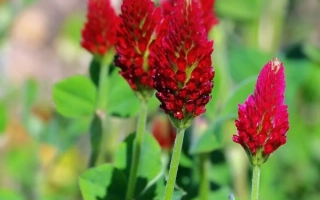
Red clover forage variety Anitra is a high-yielding perennial legume characterized by rapid early growth and uniform maturity. The vegetation period lasts 98-104 days, and the cutting period — 55-60 days. The variety is marked by high yields: over three years of variety trials, the average grain yield reached 34.1 centners/ha, and the forage mass — 450 centners/ha. Protein content in the grain var…
Usage Type
Feed on green mass, Hay
Vegetation Period
80-110
Plant Height
40-80
Root System Type
Fibrous
Description
Red clover forage variety Anitra is a high-yielding perennial legume characterized by rapid early growth and uniform maturity. The vegetation period lasts 98-104 days, and the cutting period — 55-60 days. The variety is marked by high yields: over three years of variety trials, the average grain yield reached 34.1 centners/ha, and the forage mass — 450 centners/ha. Protein content in the grain varies from 35 to 38%, and in dry matter of green mass — 18-19%, making Anitra a valuable forage plant. Clover is resistant to pod cracking and possesses ecological plasticity, tolerating snow cover and enduring frosts down to minus 25-30 °C. Additionally, it is an excellent honey plant.
Plants reach an average height of 40-65 cm and belong to the group of bushy leguminous grasses. Anitra clover is not tolerant to flooding for more than 10-15 days, so it requires appropriate growing conditions. The forage value of green mass and hay is high due to protein content (15-16%), minerals, and vitamins, with green mass surpassing many other perennial and annual grasses in vitamin content. The hay yield is 30-40 centners/ha, and feed units per 100 kg of hay reach 52, confirming its significance in forage production.
Anitra clover cultivation is recommended to begin in spring, and nitrogen fertilization during early growth stages is beneficial for optimal development. Sowing is typically carried out under protective crops, such as winter or oat crops, to shield young plants from weeds that may suppress their growth in the first year. The optimal harvest period is during the bud stage to the beginning of flowering, when protein content is highest. Late harvesting reduces forage value and increases leaf loss, negatively affecting plant winter hardiness.
Plants reach an average height of 40-65 cm and belong to the group of bushy leguminous grasses. Anitra clover is not tolerant to flooding for more than 10-15 days, so it requires appropriate growing conditions. The forage value of green mass and hay is high due to protein content (15-16%), minerals, and vitamins, with green mass surpassing many other perennial and annual grasses in vitamin content. The hay yield is 30-40 centners/ha, and feed units per 100 kg of hay reach 52, confirming its significance in forage production.
Anitra clover cultivation is recommended to begin in spring, and nitrogen fertilization during early growth stages is beneficial for optimal development. Sowing is typically carried out under protective crops, such as winter or oat crops, to shield young plants from weeds that may suppress their growth in the first year. The optimal harvest period is during the bud stage to the beginning of flowering, when protein content is highest. Late harvesting reduces forage value and increases leaf loss, negatively affecting plant winter hardiness.
Crop & resistance
Crop
Specifications
| Usage Type | |
|---|---|
| Vegetation Period | 80-110 |
| Plant Height | 40-80 |
| Root System Type | |
| Green Mass Yield (t/ha) | 35-45 |
| Hay Yield (t/ha) | 6-8 |
| Variety Characteristics | |
| Registration year | 1999 |
| Catalog | Catalog → Clover |
| Legal data |
Show · 4
|
| Country | Ukraine |
Not yet комментариев. Be the first!



KRETUNOVSKIY
ФГБНУ Федеральный Аграрный Научный Центр Северо-востока имени Н.В. Рудницкого
043 1 offer
6.73 €per 1 kg ≈ 347 ₴




See also
Often considered together with this variety



Recently viewed
Products you’ve viewed on this site
Reviews · 0