


Prices in stores
No offers yet — stores have not added prices for this product yet.
Similar varieties with prices
All offers: Stevia
Medicinal Plants
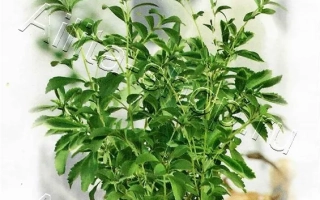
Stevia
Purpose
Medicinal, Sweetener
Registration year
2007
Your mark
0 votes
0% positive ratings
About product
A reliable stevia variety featuring high resistance to fungal pathogens and an enhanced content of natural sweeteners.
Description
Biological Potential and Breeding Value of "Sofia"
The "Sofia" stevia variety, developed by the A.L. Mazlumov All-Russian Research Institute of Sugar Beet and Sugar, is a specialized solution for agribusinesses focused on the production of natural sweeteners and medicinal raw materials. The genetic profile of the variety has been shaped with an emphasis on high adaptability to environmental stressors, distinguishing it from imported counterparts.
Phytopathological Resistance as the Foundation for Yield
A critical challenge in stevia cultivation is its vulnerability to fungal infections. Breeding efforts for "Sofia" have focused on developing resistance to pathogens that traditionally reduce the yield of commercial leaf mass:
- Cercospora leaf spot: A high level of natural resistance allows for minimizing fungicide application during the growing season.
- Powdery mildew: The variety demonstrates stable immunity, preventing premature leaf drop and preserving the biochemical composition of the raw material.
- Root rot: The selective approach ensures protection of the root system during the critical germination and seedling establishment stages.
Biochemical Product Characteristics
The use of "Sofia" on an industrial scale is justified by its intended purpose. This is not merely an ornamental or technical plant, but a full-fledged "sugar" crop. Under intensive farming conditions, the variety consistently accumulates diterpene glycosides (steviosides), making it an indispensable raw material for the pharmaceutical and food industries. The high concentration of sweeteners remains stable even with temperature fluctuations, confirming the resilience of the variety's metabolic processes to climate variability.
Practical Usage Recommendations
Given its medicinal purpose, key attention in cultivating "Sofia" is paid to the purity of the agricultural environment. Its genetically encoded resistance to major diseases allows farmers to reallocate funds typically spent on chemical protection toward optimizing plant nutrition, which directly correlates with increasing the concentration of sweet glycosides in the dry leaf residue.
Crop & resistance
Disease resistance
Specifications
| Medicinal Plants | |
|---|---|
| Purpose | |
| Registration year | 2007 |
| Catalog | Catalog → Stevia |
| Manufacturer | FGBNU VNII Saharnoj Svekly i Sahara imeni A.L. Mazlumova |
| Country | Russia |
No reviews yet. Be the first to share your experience.



See also
Often considered together with this variety




Recently viewed
Products you’ve viewed on this site
Reviews