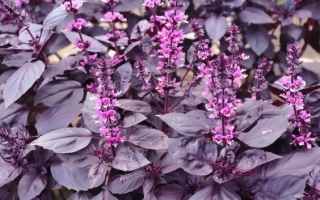
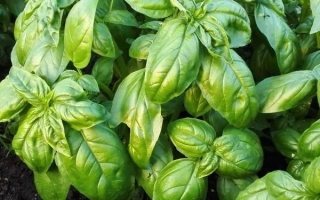
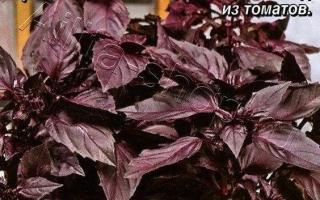
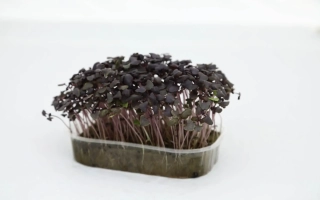
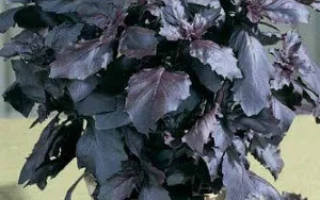
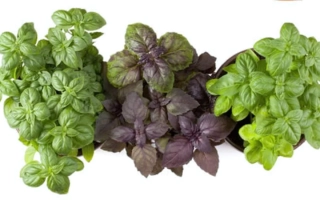
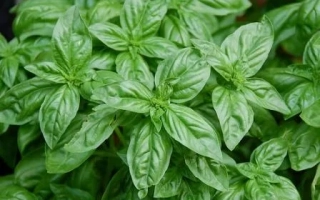
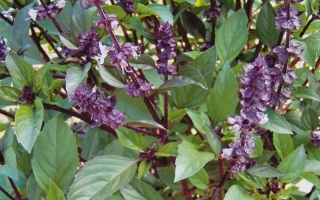
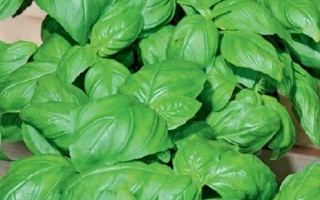
Purple basil is an annual aromatic plant with rich dark purple leaves, possessing a bright pungent aroma with notes of clove, mint, lemon, and anise. The leaves are large, dense, and have serrated edges, while the stems are also purple, giving the plant decorative appeal. The variety is distinguished by good resistance to high temperatures, shade tolerance, and drought resistance, making it versatile for cultivation in various climatic conditions. The vegetative period is about 38-40 days, after which a sprawling bush forms, reaching a height of 40 to 60 centimeters.
Purple basil is widely used in cuisine as fresh greens and dried spice. Its leaves impart dishes with a delicate piquant taste and rich aroma, thanks to the high content of essential oils and other beneficial substances such as vitamins A, B2, C, PP, carotene, rutin, glycosides, saponins, phytoncides, and tannins. It is used in salads, sauces, marinades, for fermenting cabbage, pickling cucumbers and mushrooms, and is also suitable for preparing beverages and preserving. Young shoots and leaves are valued not only for their taste qualities but also for their healing and preventive properties.
To grow basil, it is recommended to use fertile soil with a neutral pH, planting seedlings or seeds after the end of nighttime frosts and the establishment of warm weather. The plant grows well both in open ground and in greenhouses or on balcony beds. Dried leaves should be stored in glass or porcelain containers with tightly closed lids to preserve their aroma and beneficial properties. Moreover, purple basil is a useful neighbor in the garden, improving the growth and taste of tomatoes, as well as repelling insects such as flies, mosquitoes, and thrips.