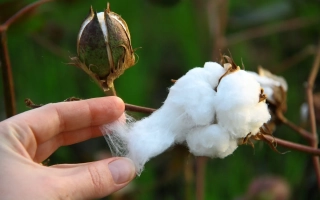
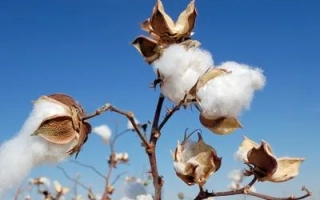
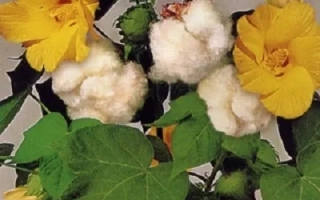
Gossypium – a perennial shrub up to 1.5 m high, which is usually cultivated in agriculture as an annual crop. The leaves are large and heart-shaped at the base, reaching a diameter of 15 cm, and the flowers are single and large – up to 9 cm, can be white or cream with a purple center, turning pink upon wilting. The fruit is an egg-shaped or spherical capsule of 3–5 segments containing dark brown seeds 5–10 mm long, covered with soft white fibers – cotton.
In terms of industrial use, cotton is a multi-purpose plant. After ginning, raw material yields high-quality fiber, with a yield of approximately 37–38%. The remaining part of the crop – seeds – makes up about 60% of the mass and is rich in both protein and oil (approximately 29% of the seed mass). Cottonseed oil is used in the food industry after refining due to the presence of the antinutrient gossypol, as well as for technical purposes. After processing the seeds, the cake remains, which becomes suitable for animal feeding after thermal treatment (e.g., double hot pressing).
In addition, cotton is characterized by a virtually waste-free production scheme: waste – linter, formed after separating the fiber, can be used as strategic raw material in various industries. High-quality cake (yield 77–78%) contains 1.7–1.8 feed units and provides additional profit for producers. Thus, cotton is a valuable plant with a wide range of applications – from the textile industry to the food and feed industry, as well as as a raw material for the production of technical materials.