


SKU #4069
·
436 views
Spicy
Apricot
User rating
0 votes0% positive reviews
No ratings yet — be the first.
Assignment
Universal
Core
Easily removable
Fruit Color
Yellow
Frost Resistance
High (up to -30°C)
About product

Seedling of Manchurian apricot from open pollination. Originator — South Ural Research Institute of Fruit and Vegetable Growing and Potato Growing. Authors: Mullaianov K.K., Pankratova A.E., Putyatyn V.I., Zamaytina I.G. Introduced into the State Register for the Ural region in 1999. Medium-sized tree. Open, moderately dense and leafy crown. Shoots dark red. Buds large — 4.7 mm, protruding. Leave…
Assignment
Universal
Core
Easily removable
Fruit Color
Yellow
Frost Resistance
High (up to -30°C)
Description
Seedling of Manchurian apricot from open pollination. Originator — South Ural Research Institute of Fruit and Vegetable Growing and Potato Growing. Authors: Mullaianov K.K., Pankratova A.E., Putyatyn V.I., Zamaytina I.G. Introduced into the State Register for the Ural region in 1999.
Medium-sized tree. Open, moderately dense and leafy crown. Shoots dark red. Buds large — 4.7 mm, protruding. Leaves round, large, dark green. Base shape — straight, apex slightly pointed. Leaf margin doubly serrated, petiole long, medium thickness, with anthocyanic coloration. Stipules two to three, medium-sized. Flowers medium-sized, stigma longer than anthers. Petals round, moderately closed, calyx cup-shaped, pedicel very short. Blooms and fruits primarily on flower clusters and spurs.
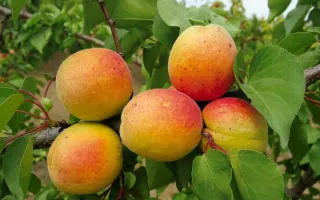
Fruits weighing 16 g, round. Main skin color yellow, covering dark red, in the form of small spots. Flesh light orange, medium. Fruit appearance rated 4.5 points, taste — 3.6 points. Contains 12.8% dry matter, 7.7% sugars, 7.6 mg/100 g ascorbic acid, 3.8 mg/100 g carotene. Pit round, weighing 1 g, brown, easily separates from flesh. Universal-purpose variety.
Enters fruiting stage at 4 years. Flowering and fruiting periods are medium. Partially self-fertile. High cold and drought resistance. Slightly affected by fungal diseases and pests.
Advantages of the variety: high frost resistance, resistance to pests and diseases, high yield, annual fruiting.
Disadvantages: spicy bitterness of fresh fruits, which is not noticeable in processed products.
Crop & resistance
Crop
Specifications hover over for a hint about the specification
| Assignment | |
|---|---|
| Core | |
|
Fruit Color
Fruit Color
The fruit color of tomato varieties is influenced by the combination of skin and flesh color. Some varieties have transparent skin, others — yellow. When combined differently, the fruits can acquire quite diverse colors. The fruit color is affected by pigments (lycopene) and thei... |
|
| Frost Resistance | |
| Self-fertility | |
| Disease Resistance | |
| Features | |
| Catalog | Catalog → Apricot |
Store offers
Prices are updated on loadLoading offers…
Aggregator catalog: prices are collected automatically from store websites, normalized by AI and converted at the current exchange rate. Before ordering, confirm the price and availability on the store's website. This block is not indexed by search engines — the data is loaded after the page opens.
Not yet комментариев. Be the first!
Alternatives
Apricot saplings · similar varieties


See also
Often considered together with this variety



Recently viewed
Products you’ve viewed on this site
Reviews · 0