


SKU #3347
·
335 views
Yellow Ribbed
Apple
User rating
3 votes67% positive reviews
No ratings yet — be the first.
Type of Sort
Winter Apple Variety
Prices in stores
from6.63 €per seedling
pack from 663.12 € per 100 pcs
1 offer from 1 store
Store offers · 1 from 1 stores
Prices are updated on loadLoading offers…
Available at: Evrosag
Aggregator catalog: prices are collected automatically from store websites, normalized by AI and converted at the current exchange rate. Before ordering, confirm the price and availability on the store's website. This block is not indexed by search engines — the data is loaded after the page opens.
About product

Winter variety developed by S. P. Kedrin at the Samara Experimental Station for Horticulture by crossing Antonovka saffron with Pepin London. It is widely grown in the Volga region of Samara Oblast and included in the Samara Oblast State Register. Trees are medium-sized with round or round-conical crowns. Fruits are located on different-aged spurs and fruiting branches. The crown is quite den…
Type of Sort
Winter Apple Variety
Description
Winter variety developed by S. P. Kedrin at the Samara Experimental Station for Horticulture by crossing Antonovka saffron with Pepin London. It is widely grown in the Volga region of Samara Oblast and included in the Samara Oblast State Register.
Trees are medium-sized with round or round-conical crowns.
Fruits are located on different-aged spurs and fruiting branches. The crown is quite dense.
Shoots of medium thickness, densely hairy. Leaves are elongated-elliptical, serrated, dark green, often toothed.
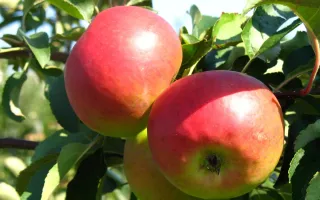
Fruits are medium-sized (100-150 g), one-dimensional, light yellow. Shape is round-conical or conical, ribbed with five rounded ridges protruding above the calyx and reaching halfway down the fruit. Skin is strong, not rough, oily. Subcutaneous dots are barely noticeable. Fruit stem is long, medium thickness, emerging from a deep depression. Receptacle is narrow, medium depth. Calyx is large and open.
Flesh is creamy, firm, finely textured, juicy, tender, pleasantly tart-sweet with good and excellent taste.
Fruits are harvested in the second half of September, ripening simultaneously. Consumer maturity of fruits occurs at the end of October, and they are stored until mid-March.
Early-bearing variety, begins fruiting at 5-6 years. Bears fruit annually in its youth.
Moderately winter-hardy. In years with insufficient moisture, fruit size noticeably decreases.
Fruits and leaves are moderately resistant to scab.
Advantages of the variety: early fruiting, high yield.
Disadvantages of the variety: insufficient cold hardiness and scab resistance in Samara during wet years.
Crop & resistance
Crop
Specifications
| Type of Sort | |
|---|---|
| Catalog | Catalog → Apple |
Not yet комментариев. Be the first!
Alternatives
Apple saplings · similar varieties


See also
Often considered together with this variety


Recently viewed
Products you’ve viewed on this site
Reviews · 0