
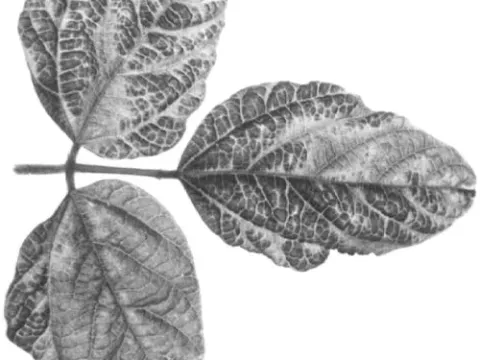
Soybean mottle virus
Sobemovirus somv
The symptoms of Soybean mottle virus manifest primarily as a mosaic pattern on the leaves, characterized by a mix of light green and dark green areas. These patterns may eventually lead to distinct chlorotic spots or mottling across the foliage.
What the section contains
Soybean mottle virus
Infected soybean plants typically exhibit stunted growth, which is a major diagnostic sign in the field. The internodes of affected plants become significantly shorter, leading to a dwarf-like appearance that differentiates them from healthy neighboring plants.
During the flowering stage, the infection often leads to poor pod set and floral abortion. The pods that do develop are frequently malformed, reduced in size, and contain shriveled, low-quality seeds, which directly impacts the harvest potential.
Leaf deformation is another common symptom, which may present as crinkling or curling of the leaf margins. This is often accompanied by a reduction in the overall leaf area, which limits the plant's photosynthetic capacity.
Advanced stages of the infection may cause the development of necrotic lesions on the leaf tissue. It is critical for agronomists to distinguish these symptoms from nutrient deficiencies or other viral infections, often requiring laboratory testing.
The causative agent is the Soybean mottle virus, a member of the Sobemovirus genus. These viruses are characterized by small, spherical particles containing a single-stranded RNA genome, which facilitates efficient replication within host cells.
SoMV is notable for its stability in the environment, allowing it to persist in plant debris for certain periods. This persistence necessitates careful field management, especially during post-harvest cleanup and tillage processes.
The primary transmission routes for this pathogen include mechanical contact and transmission by insect vectors. Specific beetles are known to act as efficient vectors, transmitting the virus while feeding on soybean foliage and stems.
The virus acts systemically within the plant, moving through the vascular tissue to affect all parts of the organism. This systemic spread interferes with metabolic processes, significantly impairing the plant's ability to produce adequate yields.
While soybean is the primary host, the virus can survive on certain wild legume species. These alternative hosts serve as reservoirs for the virus, ensuring its presence in the ecosystem across different growing seasons.
Warm and humid weather conditions are highly favorable for the development of the virus. Such conditions promote the activity and population growth of insect vectors, which accelerates the spread of the virus within and between fields.
Drought stress also plays a significant role in the prevalence of the disease. Plants weakened by environmental stress exhibit reduced resistance, making them more susceptible to viral infections and limiting their ability to recover.
The use of infected seed remains a primary driver for the initial outbreaks. Planting seeds that carry the virus results in the immediate emergence of infected seedlings, which then serve as starting points for secondary spread.
High planting densities create an ideal environment for mechanical transmission, as frequent physical contact between plants allows the virus to spread easily when foliage is damaged by wind or farming equipment.
Migration of insect vectors from nearby weed populations or adjacent legume fields often causes sharp increases in infection rates during the mid-season. Monitoring these vectors is essential for effective disease forecasting.
The economic impact of Soybean mottle virus is mainly realized through yield reduction. Direct losses in grain weight can be severe, especially when infection occurs during the early vegetative or reproductive stages of the soybean crop.
Beyond yield quantity, the disease significantly degrades the quality of the soybean harvest. Seeds from infected plants are often smaller, show reduced germination rates, and have lower protein and oil content, making them undesirable for market.
Root health is also adversely affected by the systemic infection, which hinders the plant’s nitrogen-fixing capabilities. A weakened root system limits water and nutrient uptake, leading to further decline in plant vigor.
Infected crops show heightened sensitivity to other opportunistic pathogens, such as root rots and foliar fungal diseases. This combination of stressors can lead to premature senescence and death of entire patches within a field.
Repeated viral presence requires producers to invest more in disease management and often necessitates the premature renewal of the seed stock to prevent continuous cycles of infection.
The most important control measure is the use of healthy, virus-free, and certified seeds. Ensuring that the initial crop is pathogen-free is the single most effective way to prevent early-season outbreaks.
Insecticide applications targeted at controlling beetle vectors are necessary in regions with high infection pressure. Timing these treatments to match the peak activity of the vectors is critical for minimizing transmission.
Maintaining proper spacing between soybean fields and potential viral reservoirs, such as weed-infested areas or other legume crops, helps reduce the incidence of primary infections by incoming insect populations.
Sanitation efforts, including the effective management of weeds and volunteer soybean plants, are vital to eliminating the reservoirs that sustain the virus between growing seasons.
Breeding and planting resistant soybean varieties remain the most sustainable long-term strategies. Advancements in genetic selection continue to provide farmers with tools to mitigate the impact of SoMV even when environmental conditions favor the pathogen.