
Soybean yellow dwarf virus
Luteovirus glycinis
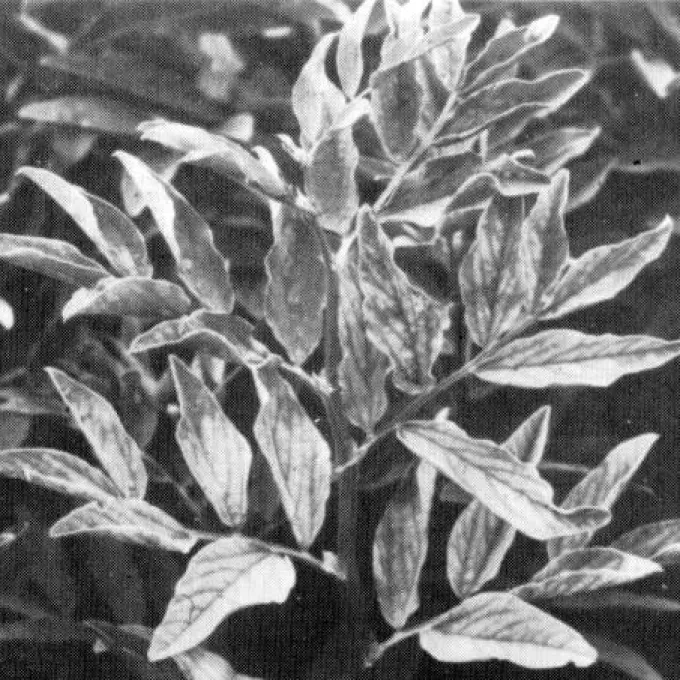
Description
Symptoms
The most characteristic symptom is a systemic yellowing of leaves, often manifesting as interveinal chlorosis, which typically begins at the leaf margins.
Infected plants exhibit severe stunting and reduced biomass compared to healthy individuals, often resulting in a sparse, sickly appearance of the field.
Leaves may become leathery, brittle, or deformed, showing signs of significant metabolic disruption that limits the plant's overall development.
Root systems are often poorly developed, contributing to the poor overall health and weakened resistance of the plants to environmental stressors.
Reproductive success is severely hampered, with delayed flowering, reduced pod set, and the formation of empty or poorly filled pods.
Pathogen
The disease is caused by Luteovirus glycinis, a virus restricted to the phloem tissue of the host plant. It belongs to the Luteoviridae family.
The virus is exclusively transmitted by aphid vectors during their feeding process. It does not spread through mechanical transmission or seed transmission in field conditions.
Once an aphid acquires the virus from an infected plant, the virus remains within the insect's body for a prolonged period, allowing it to transmit the pathogen to multiple healthy plants.
This persistent mode of transmission makes aphids highly efficient vectors for the spread of Luteovirus glycinis across soybean fields.
The biology of the virus is intimately linked to the lifecycle and migration patterns of its aphid vectors in the agricultural landscape.
Conditions for development
Environmental conditions that favor the proliferation and migration of aphids are the primary drivers for the spread of this viral disease.
Warm, dry weather conditions facilitate rapid aphid reproduction, leading to higher population densities and increased feeding activity on soybeans.
The proximity of infected alternative hosts or weeds provides an environment where the virus can overwinter and be carried into new soy crops.
Field density and nutritional status may influence aphid attractiveness, potentially making certain planting patterns more prone to infestation.
The timing of aphid migration relative to the growth stage of the soybean crop determines the overall severity of the infection.
Why it matters
The primary economic impact is a reduction in seed yield, which can range significantly based on the timing of initial infection during the vegetative season.
Quality reduction is another critical concern, as viral infection often results in lower protein and oil content in the harvested beans.
Infected plants have reduced ability to withstand drought or other abiotic stresses, further exacerbating the reduction in final harvest yield.
The cumulative effect of the disease can lead to field abandonment in severe cases, causing substantial financial losses for soybean producers.
Secondary infections by pathogens can occur more easily on virus-weakened plants, compounding the overall damage to the crop.
Protection
Integrated pest management (IPM) focusing on aphid control is the most effective strategy to prevent the widespread transmission of the virus.
Effective weed control in and around the fields is essential to eliminate reservoirs where the virus and aphids can persist throughout the year.
Using resistant or tolerant soybean varieties is highly recommended to minimize the impact of the virus even if aphids are present.
Strategic timing of planting can help crops avoid the peak migration period of aphid vectors, thereby reducing the probability of early infection.
Routine scouting and monitoring of aphid populations allow for timely and efficient application of systemic insecticides when action thresholds are reached.
Discussion
No discussions yet — be the first.