
Soybean ringspot virus
Nepovirus glycinis
Description
Symptoms
The most recognizable symptom is the development of chlorotic rings on the foliage, which often progress into brown or necrotic patterns as the disease advances.
Infected plants typically show significant stunting and reduced height compared to healthy specimens, leading to an uneven appearance in the field.
Leaves often become distorted or crinkled, displaying a mosaic pattern of light and dark green areas due to the interference with chlorophyll production.
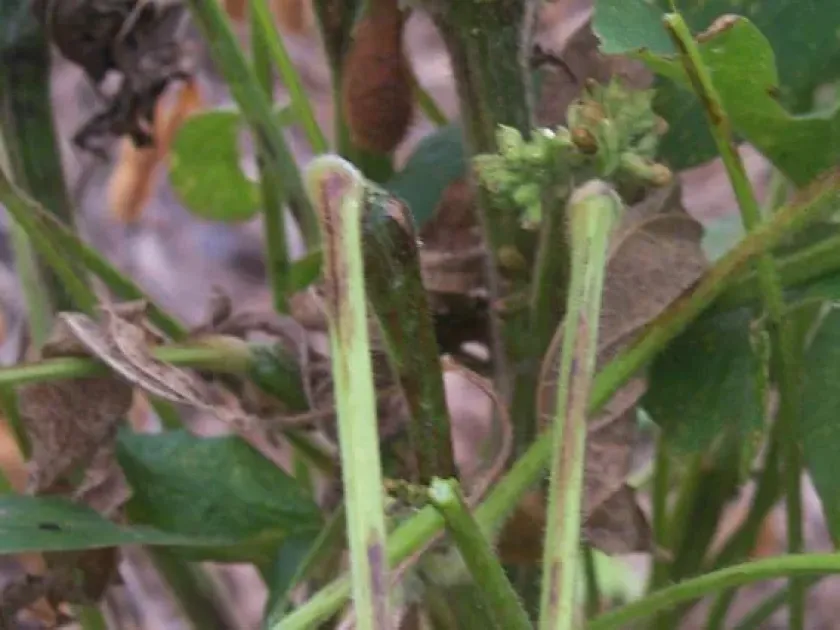
Stems may also exhibit localized necrotic lesions, reflecting systemic spread throughout the plant structure and potential vascular collapse.
- Chlorotic spots and rings on leaves.
- Leaf distortion and crinkling.
- Stunting and reduced plant growth.
- Lower flowering rate and pod development.
Pathogen
The causal agent of the disease is Nepovirus glycinis, which belongs to the Nepovirus genus. This viral pathogen primarily targets legume crops and a wide range of weeds.
It is classified as a systemic viral infection that spreads throughout the plant's vascular system, severely disrupting metabolic processes and reducing overall biomass accumulation.
The virus exhibits persistence in plant tissues, remaining viable in both infected seeds and perennial host plants that survive through winter seasons.
It primarily affects soybeans, but its ability to infect other related species makes it a persistent challenge in diverse agricultural environments.
Transmission occurs predominantly via soil-borne nematodes, which introduce the virus while feeding on the root systems of healthy seedlings.
Conditions for development
The disease development is highly dependent on environmental conditions that favor the activity of soil-borne nematodes, including high soil moisture and temperate climate.
Infestation is most common in the early growth stages, as seedlings are particularly susceptible to root damage caused by nematode feeding vectors.
The virus often persists in the landscape through perennial weeds, which act as reservoirs that bridge the gap between growing seasons.
Seed transmission serves as another primary route of introduction, especially when farmers utilize non-certified seed sources from previously infected fields.
Aggressive tillage practices can inadvertently distribute nematode populations throughout a field, thereby accelerating the horizontal spread of the viral infection.
Why it matters
Soybean ringspot virus causes substantial economic losses, with yield reductions ranging from 15% to 40% depending on the infection pressure and timing.
Beyond quantity, the quality of the soybean crop suffers significantly, as seeds often become shriveled, lose germinability, and contain lower oil and protein content.
The systemic nature of the virus impairs the plant's ability to photosynthesize effectively, preventing it from producing sufficient energy for full pod filling.
Infected crops show increased vulnerability to secondary stress factors, including drought, heat waves, and potential fungal or bacterial pathogens.
Field patches with high viral incidence often experience total yield loss, complicating harvesting logistics and overall production efficiency.
Protection
The primary control measure involves the use of certified, disease-free seed stocks to prevent the initial introduction of the virus into the field.
Implementing a rigorous crop rotation strategy that avoids susceptible legumes is essential to reducing nematode populations in the soil.
Effective weed management is critical, as controlling alternate hosts significantly reduces the availability of the virus in the environment.
Application of nematicides or the use of resistant soybean cultivars can provide a protective barrier in regions where the virus pressure is historically high.
Regular field scouting and prompt removal of symptomatic plants can help limit the spread of the virus within a planting, provided the infestation remains localized.
Discussion
No discussions yet — be the first.