
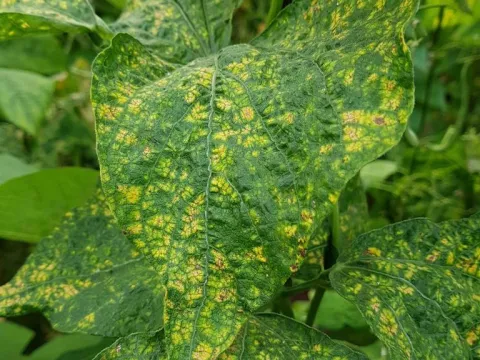
Soybean yellow mosaic virus
Begomovirus glycinevariati
The causal agent is the Soybean yellow mosaic virus, a viral pathogen primarily transmitted by insect vectors.
What the section contains
Soybean yellow mosaic virus
It is classified as a virus-induced mosaic disease, causing systemic disturbances in plant physiological functions.
The virus replicates in the phloem and parenchyma cells, leading to an impairment of systemic transport of nutrients.
Aphids are the primary vectors for this virus, moving it efficiently between plants during their feeding activities.
Alternative hosts, including various leguminous weeds, serve as long-term reservoirs for the virus in agroecosystems.
Initial symptoms include chlorotic spots that evolve into a characteristic mosaic pattern on the leaf surface.
Affected leaves exhibit crinkling, cupping, and deformation, which significantly reduces the photosynthetic area of the plant.
Interveinal yellowing is a distinct visual indicator, often accompanied by a stunted growth habit.
Plants infected early in the season display reduced height and poor overall vigor compared to healthy counterparts.
- Mottled yellow and green foliage.
- Leaf distortion and curling.
- Reduced internode length.
Warm and humid climatic conditions favor the population growth and migration of aphid vectors.
High insect activity during the vegetative stages of soybean growth significantly increases transmission rates.
Field margins infested with weed hosts provide continuous sources of inoculum throughout the growing season.
Dense planting patterns can facilitate the movement of vectors and increase the speed of secondary spread.
Environmental stress factors can exacerbate symptom expression and decrease the plant's ability to tolerate the infection.
The disease leads to significant yield losses by reducing the total number of pods and seed weight per plant.
Viral infection disrupts protein synthesis and energy balance, leading to lower quality seed production.
Infected stands show reduced resilience to environmental stress, further compounding the reduction in biomass.
Economic damage is most severe when early-stage infections occur, leading to stunted plants and potential crop failure.
Managing virus-infected fields requires preventative strategies as there are no effective post-infection chemical treatments.
Use only certified disease-free seeds to prevent the introduction of the virus into the field.
Implement a robust integrated pest management (IPM) program to control aphid populations before they reach threshold levels.
Maintain clean fields by removing potential weed hosts that harbor the virus and the insect vectors.
Select soybean varieties that show genetic resistance or tolerance to viral mosaic complexes where available.
Rotate crops with non-host species to interrupt the lifecycle and reduce the inoculum load in the field environment.