
Riboviria
Riboviria
Riboviria refers to a vast group of viruses characterized by having an RNA genome. In the field of plant pathology, these agents are responsible for a wide variety of systemic diseases that pose significant challenges to global agriculture.
What the section contains
Riboviria
The pathogen infects plant cells by utilizing the host's biochemical machinery to replicate its genetic material. Once the virus gains entry, it redirects cell resources toward the production of viral proteins and new virions.
Viral particles exhibit diverse morphologies, including rod-shaped, filamentous, or icosahedral forms. Their survival in the environment varies, with some viruses persisting for long periods in infected plant debris or soil.
The transmission is primarily facilitated by biological vectors such as aphids, leafhoppers, thrips, and mites. These insects acquire the virus while feeding and subsequently inoculate healthy plants during subsequent feedings.
A broad range of crops is susceptible to riboviral infections, including cereals, vegetables, fruit trees, and ornamental plants. The economic impact is significant, particularly in intensive farming systems where uniform crop susceptibility is common.
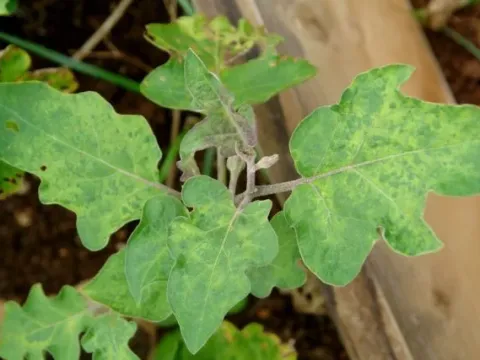
Symptoms of riboviral infection are highly variable, depending on the viral strain and the host species. Leaf mosaic patterns, characterized by irregular light and dark green patches, are among the most classic diagnostic signs.
Plants frequently exhibit morphological distortions, such as leaf curling, crinkling, or a filiform (thread-like) appearance. These physical changes disrupt the plant's photosynthetic efficiency, leading to a visible decline in vigor.
Stems may become brittle or display abnormal growth, with shortened internodes resulting in a stunted, dwarfed habit. Necrotic spots or streaks can also develop on foliage and stems as the virus causes localized tissue death.
Reproductive parts, including flowers and fruits, are often affected. Common signs include flower color-breaking, fruit deformation, spotty or mottled skin, and premature abscission of buds or fruitlets.
- Mosaic patterns and chlorotic mottling on foliage.
- Leaf deformation, curling, and abnormal shape.
- Stunted growth and reduced plant height.
- Presence of necrotic lesions on stems or leaves.
- Poor fruit quality, malformation, and low yield.
The spread of these viruses is largely dictated by environmental conditions that favor the proliferation of insect vectors. Warm temperatures and adequate humidity often boost populations of aphids and whiteflies, leading to increased transmission.
Weed management plays a crucial role in disease dynamics, as many weeds act as alternative hosts and reservoirs for viruses throughout the off-season. Neglected field margins are frequent sources of infection.
Human activity is a major factor in the rapid spread of viral pathogens. The use of contaminated seeds, vegetative cuttings, or infected nursery stock can introduce a virus into an area where it was previously absent.
Environmental stress factors, such as drought, nutrient deficiency, or poor soil health, exacerbate the severity of the symptoms. Stressed plants are generally more susceptible to viral invasion and struggle to recover.
Poor sanitation practices, such as failing to disinfect pruning tools or ignoring the presence of infected individuals, allow for rapid mechanical transmission of the virus within a crop stand.
Riboviria infections cause systemic disease, meaning the virus spreads throughout the plant's vascular system. This total infection leads to severe disruptions in nutrient transport and carbon assimilation, causing drastic yield losses.
Beyond quantity, the quality of agricultural produce is severely compromised. Harvested fruits often lack flavor, exhibit unattractive blemishes, or have reduced storage life, rendering them unfit for the commercial market.
Infected plants display a weakened immune response, making them highly vulnerable to opportunistic pathogens. Secondary infections from bacterial soft rots or fungal blights are common consequences of viral-induced weakening.
Due to the lack of curative treatments, the financial burden is extreme. Infected fields often require total destruction to prevent further spread, resulting in complete loss of investment for the growing season.
Indirect costs include increased expenditure on vector control, the loss of market reputation, and the necessity to transition to more expensive, virus-tested, or resistant plant varieties.
Prevention is the only viable strategy for managing riboviral infections. The use of certified, virus-free seeds and plant material is the primary defense against the introduction of the pathogen into a farm.
Effective vector control is essential. Regularly monitoring insect populations and applying targeted insecticides during peak migration periods can significantly lower the rate of viral transmission.
Strict adherence to cultural practices, including consistent crop rotation and aggressive weed control, helps minimize the availability of virus reservoirs. Maintaining physical barriers can also be an effective strategy in protected cultivation.
Sanitary measures such as the immediate removal and destruction of infected plants are critical for limiting focal outbreaks. Furthermore, tools used for pruning or grafting must be disinfected routinely to prevent mechanical transmission.
Plant breeding for genetic resistance represents the most sustainable, long-term solution. Developing and utilizing cultivars that can resist virus infection or suppress replication is the gold standard for integrated pest management.