
Rice dwarf
Phytoreovirus alphaoryzae
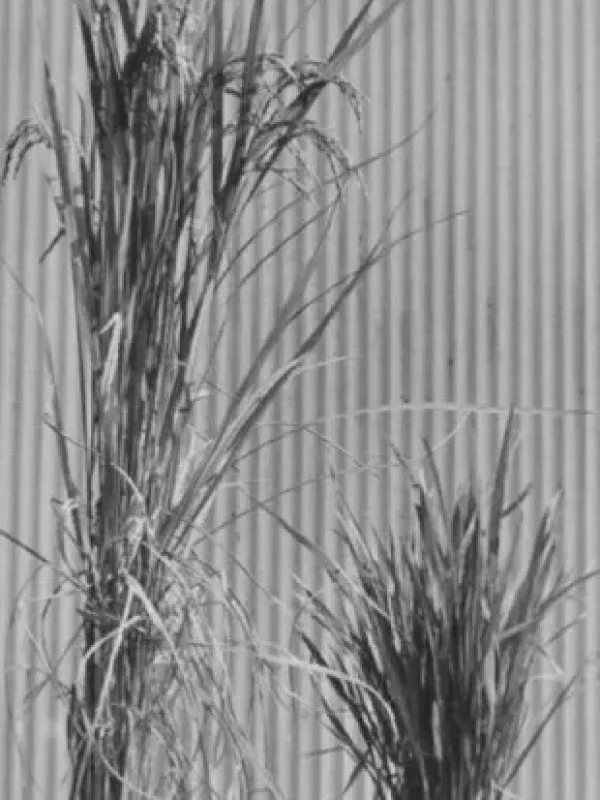
Description
Symptoms
The primary visual symptom is a marked stunting of infected plants, which gives the disease its name. The stems become significantly shorter, and tillering increases, giving the plant a rosette-like appearance.
Distinctive chlorotic spots or intermittent streaks appear on the leaf blades of young leaves, running parallel to the leaf veins.
When rice is infected early in the growing season, plants may remain stunted throughout their entire development and fail to produce panicles entirely.
In cases where infection occurs at later stages, panicles develop poorly, often appearing deformed, with grains either missing or remaining underdeveloped and empty.
Affected fields appear uneven, with patches of stunted plants standing out clearly against the surrounding crop due to their low height and characteristic leaf mottling.
Pathogen
The causative agent of the disease is the Rice dwarf virus, classified as Phytoreovirus alphaoryzae. It is a virus with a segmented double-stranded RNA genome, belonging to the Reoviridae family.
The virus primarily affects rice crops, although it has the potential to infect certain species of wild grasses under experimental conditions.
In nature, insects known as leafhoppers serve as the primary vectors for virus transmission. Specifically, Nephotettix cincticeps and other species of the same genus are the most significant carriers.
The virus exhibits transovarial transmission, meaning an infected female leafhopper can pass the virus to its offspring. This capability ensures the virus persists in insect populations even when susceptible host plants are absent.
The incubation period of the virus within the leafhopper vector ranges from a few days to several weeks, after which the insect becomes capable of transmitting the infection to healthy plants throughout its lifespan.
Conditions for development
The development of the disease is directly tied to the population dynamics of the leafhopper vectors. The most widespread outbreaks occur during seasons with favorable conditions for insect reproduction and migration.
Temperature plays a crucial role; moderately warm weather facilitates the rapid development of leafhoppers and accelerates the viral replication process within the insect vector.
The presence of viral reservoirs in the vicinity of fields, such as wild grasses or rice regrowth, significantly increases the risk of infecting young crops at the start of the season.
Agricultural practices in regions with high humidity create optimal microclimatic conditions that support the active life cycle of vectors within the lower canopy of rice fields.
The scale of an epiphytotic event depends on the synchronization between the leafhopper migration peak and the stage of rice growth that is most susceptible to primary infection.
Why it matters
Rice dwarf disease poses a serious threat to crop yield, as infected plants often fail to form full grains, leading to direct losses in production volume.
The disease causes a significant decline in grain quality: due to incomplete filling, the 1000-grain weight drops sharply, and the percentage of empty spikelets increases dramatically.
Early-stage infection can lead to the complete death of individual plants, creating gaps in the field and reducing overall crop density.
Beyond direct yield loss, the presence of disease hotspots complicates standard agricultural practices and necessitates additional expenditures for pest control measures.
The economic impact also includes the potential need for reseeding severely damaged areas or implementing intensive chemical treatments, which increases the total cost of rice production.
Protection
The primary method of control is the use of resistant rice cultivars, which possess the genetic ability to limit viral replication or symptom development.
Regulating the population density of leafhopper vectors via insecticides is a critical step, especially during periods of high insect activity in the fields.
Spatial isolation of rice fields from potential viral sources and the elimination of weeds on surrounding land significantly lower the overall infection pressure.
Adhering to optimal planting dates helps avoid overlapping the rice's most vulnerable growth stage with the peak migration period of leafhopper adults.
- Monitoring vector populations using yellow sticky traps.
- Destroying rice stubble and regrowth after harvest to reduce viral reservoirs.
- Regular weeding of fields and irrigation canals to remove alternate host grasses.
Discussion
No discussions yet — be the first.