
Passion fruit woodiness virus
Potyvirus passiflorae
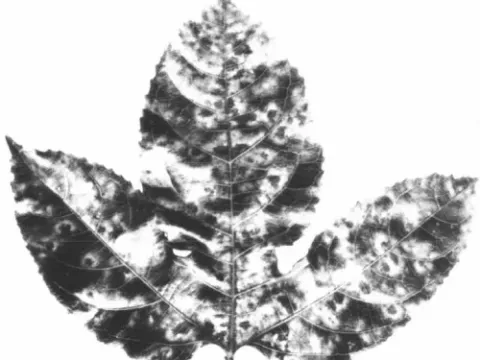
The primary symptom of the disease is the appearance of distinct spots on leaves, which often display a mosaic pattern or chlorotic ring spots.
What the section contains
Passion fruit woodiness virus
Infected leaves frequently become distorted, wrinkled, and reduced in size, which significantly impairs the plant's photosynthetic efficiency.
Fruit symptoms include necrotic spots, uneven skin texture, and severe malformation, rendering the produce unmarketable for commercial sale.
Stems of affected plants often show signs of stunted growth, looking overall weaker and lagging behind healthy specimens in vigor.
As the infection advances, plants may suffer from premature leaf drop, leading to overall plant exhaustion and eventual decline.
The disease is caused by the Passion fruit woodiness virus (PWV), a member of the genus Potyvirus, typically transmitted via aphids and mechanical contact.
The virus consists of filamentous particles containing single-stranded RNA, a characteristic feature of the Potyviridae family.
Aphids are the primary vectors of the virus in nature, acquiring the pathogen during feeding on infected plants and transmitting it to healthy ones.
The infection can spread through contaminated seeds or infected plant material used for propagation, as well as via unsterilized pruning equipment.
Once introduced into the plant, the virus moves systemically through the phloem, rapidly colonizing tissues and disrupting normal cellular metabolism.
The virus spreads most rapidly during periods of high aphid activity, which are typically associated with warm and humid environmental conditions.
Surrounding weed populations serve as reservoirs for both the virus and its insect vectors, facilitating constant re-infection of the main crop.
Intensive greenhouse cultivation creates ideal conditions for virus spread due to high plant density and reduced airflow, which favors insect colonization.
The use of infected planting stock is the most common cause of new disease outbreaks in passion fruit plantations.
Close plant spacing increases the likelihood of mechanical transmission when foliage touches, especially during routine maintenance and harvesting operations.
Passion fruit woodiness virus causes significant economic losses by reducing total fruit yields and negatively impacting the quality and flavor of the harvest.
Constant infection weakens the plant's overall physiology, making it more susceptible to environmental stress and secondary fungal or bacterial pathogens.
Plants chronically infected with PWV are unsuitable for vegetative propagation, as the virus is efficiently transmitted through cuttings and scions.
The necessity for continuous pest management and phytosanitary measures adds considerable costs to the overall production of passion fruit.
In cases of severe infection, growers may be forced to eradicate entire sections of the plantation to prevent further spread of the virus.
The most critical control measure is the use of certified, virus-free planting material to prevent the introduction of the pathogen into new areas.
Effective aphid control is essential and should be achieved through regular insecticide applications to interrupt the transmission cycle of the virus.
Strict hygiene protocols, such as disinfecting tools with appropriate solutions between every plant, are necessary to prevent mechanical transmission.
Removing weeds from around the plantation area reduces the presence of alternative host plants and lowers the overall population density of insect vectors.
Selecting and planting resistant passion fruit varieties is considered the most sustainable and efficient strategy for long-term virus management.