
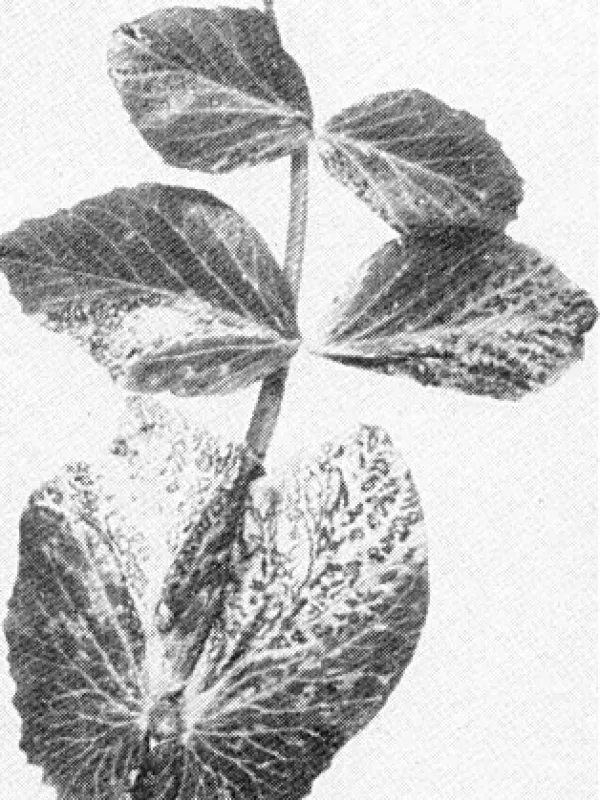
Description
Symptoms
The primary symptom of infection is stunted growth, accompanied by a characteristic browning of the plant's apex. The stems often show twisting and significantly shortened internodes, giving the plant a dwarfed and sickly appearance.
Chlorotic mosaic or spotting appears on the leaves, which eventually progresses to necrotic areas. In some cases, leaf margins may curl, severely hindering the plant's ability to photosynthesize effectively.
When pods are affected, they show deformation and a significant delay in seed development within the shell. The quality of the harvest is drastically reduced due to spotting on the pod surfaces.
The root system of infected plants often appears underdeveloped, making the crop highly susceptible to moisture stress. In field conditions, infection patches tend to expand as machinery moves through the field and water drains.
The gradual dieback of plant tissue starts from the upper tiers and spreads downwards, which gave the disease its common name. Without early diagnosis, the virus can spread to cover up to 80% of the field area.
Pathogen
The pathogen is the Pea early browning virus (PEBV), which belongs to the Tobravirus genus. It is a virus with a split genome consisting of single-stranded RNA.
The main natural reservoirs and vectors of the pathogen in the soil are free-living nematodes from the Trichodorus and Paratrichodorus genera. They feed on the roots, transmitting viral particles to healthy plants.
The virus is characterized by high persistence in the soil, remaining in the bodies of nematode vectors for a long period. This makes biological soil disinfection almost impossible in affected areas.
In addition to peas, the virus can infect a wide range of host plants, including beans, alfalfa, and various weeds. This creates additional challenges for crop rotation management.
Mechanical transmission of the virus through tools or seeds is possible, although the soil-borne route via nematodes is the dominant factor in field epiphytotics.
Conditions for development
The spread of the virus depends directly on the activity of nematode vectors, which prefer light sandy or sandy-loam soils. It is in these soil types that the most serious disease outbreaks are recorded.
Optimal conditions for nematode development include high soil moisture during the spring. After heavy rains, the migration of vectors toward plant roots accelerates significantly.
Soil temperature plays a crucial role: a moderately cool spring promotes earlier symptom manifestation in pea seedlings. During hot summer periods, vector activity may decline.
The presence of weeds in the field provides the virus with a nutritional bridge during periods when the main crop is not present. Weeds act as a green reservoir for maintaining the virus in the soil.
Infection often occurs unevenly, in patches, which is associated with the field's micro-relief and areas of high nematode concentration in the soil profile.
Why it matters
The damage caused by pea early browning manifests primarily in a sharp reduction in marketable grain weight. Affected plants often fail to form full pods, leading to significant yield loss.
The disease leads to a substantial loss in the quality of seed material, as seeds from affected pods often have low germination rates and poor vigor.
Due to the disruption of physiological processes in the stems and roots, plants become more susceptible to secondary fungal infections, which further complicates the phytosanitary situation.
Economic losses consist not only of yield reduction but also of the costs associated with nematode control and the necessity for expensive land reclamation measures.
In fields with high infestation levels, the virus makes pea cultivation economically unviable for several seasons, forcing farmers to restructure their crop rotation plans.
Protection
The main preventive measure is strict adherence to crop rotation, excluding susceptible crops for 4–5 years in areas where nematodes have been detected.
It is essential to conduct thorough weed control, as weeds serve as reservoirs for both the virus and its vectors. Fallow periods or the use of herbicides help reduce the weed population.
The use of virus-resistant pea varieties is the most effective, albeit difficult to access, control method. Breeding efforts in this direction continue in many countries.
The application of nematicides in commercial vegetable growing allows for a temporary reduction in vector numbers, but this method is expensive and has environmental limitations.
Sanitary cleaning of agricultural machinery after working in infested areas prevents the transport of infected soil and nematodes to clean fields on the farm.
Pathogens and affected parts
Affects crops · 1
Discussion
No discussions yet — be the first.