
Passion fruit mottle virus
Potyvirus orionspassiflorae
The Passion fruit mottle virus (PfMV) is a plant pathogenic virus belonging to the genus Potyvirus. It primarily infects plants within the Passifloraceae family, significantly impacting commercial passion fruit cultivation.
What the section contains
Passion fruit mottle virus
The virus consists of flexuous filamentous particles containing a single-stranded RNA genome. Like other members of the Potyvirus group, it relies on host cell machinery to replicate, causing systemic infection throughout the plant.
Wild species of Passiflora and various weeds act as natural reservoirs for the virus. In agricultural environments, it persists in perennial plantings and is spread to new areas via infected nursery stock.
Transmission mainly occurs non-persistently through aphid vectors. Additionally, the virus can be spread mechanically through contaminated gardening tools, such as pruning shears, during routine maintenance.
Once introduced into the plant tissue, the virus quickly spreads through the phloem to all parts, including roots, stems, leaves, and fruits, establishing a systemic infection that is difficult to manage.
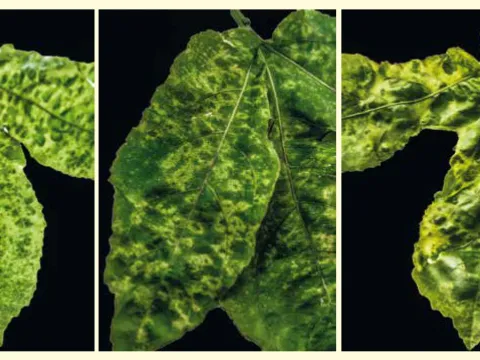
The primary symptom of infection is the development of mottle, chlorotic spots, and a mosaic pattern on the leaf blades. Leaves often become deformed, reduced in size, and display crinkling or puckering.
Infected plants exhibit stunted growth and an overall unthrifty appearance. Stems may show necrotic streaks, and the shoot development is significantly inhibited compared to healthy specimens.
Fruits are severely affected, often becoming distorted, bumpy, and covered with spots or rings, which drastically reduces their marketability and quality. The interior of the fruit may also show signs of degradation.
Heavy infections lead to premature leaf drop and blossom abscission. Fruit set is reduced, and the overall yield of the plant drops to levels that make cultivation economically non-viable.
Visual diagnosis can be challenging as symptoms may mimic nutrient deficiencies or mite damage, necessitating confirmation through laboratory tests such as ELISA or RT-PCR for accurate identification.
The main impact of the Passion fruit mottle virus is the substantial reduction in yield and fruit quality. Infected vines have shorter lifespans and lower overall vitality, leading to reduced production efficiency.
The virus disrupts photosynthesis and nutrient translocation, severely weakening the plant. This makes the host more susceptible to secondary fungal and bacterial pathogens, often leading to total plant failure.
Commercial losses include not only direct yield reduction but also the loss of produce quality, making the harvest unsuitable for sale. Growers may face the necessity of removing entire infected blocks of plantations.
The rapid spread of the virus by aphids makes it a major threat to agricultural regions. Without intervention, a single infected plant can become a source of infection that quickly overwhelms an entire planting.
The lack of curative chemical treatments for viral diseases places high importance on prevention, as once a plant is infected, it remains a reservoir of the virus for the remainder of its life.
The most effective strategy for managing the virus is rigorous phytosanitary practice. Using exclusively virus-indexed and certified nursery stock is the foundation for preventing the introduction of the virus into a new farm.
Active control of aphid populations is essential. Using systemic insecticides can help manage vector numbers and slow the spread of the virus within the plantation during peak periods of insect activity.
Sanitation is critical; all infected plants should be promptly identified, removed, and destroyed to eliminate the source of infection for healthy crops. Never compost diseased plant material.
All gardening tools must be disinfected with appropriate solutions (such as sodium hypochlorite or alcohol) between each plant contact to prevent mechanical transmission of the virus through contaminated sap.
Maintaining spatial isolation from old, potentially infected plantings and strictly controlling weed hosts around the fields significantly reduces the risk of virus introduction from natural reservoirs.