
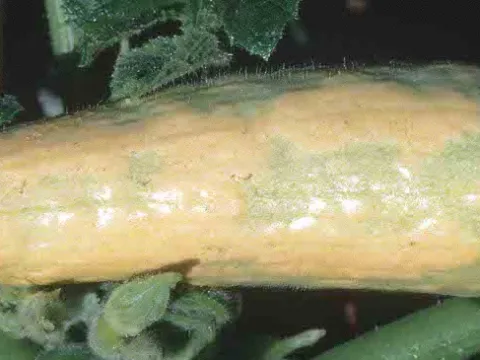
Watermelon mosaic virus
Potyvirus melozonati
The causative agent of the disease is the Watermelon mosaic virus (WMV), which belongs to the Potyvirus genus. It is a single-stranded RNA virus with a broad host range, primarily infecting Cucurbitaceae family members.
What the section contains
Watermelon mosaic virus
The virus is transmitted in a non-persistent manner by aphids. This means the virus particles are acquired by the insect during brief feeding probes and are transmitted to healthy plants almost immediately.
WMV is not seed-borne, but it persists in various weed hosts during the off-season. These weeds serve as the primary reservoirs from which the virus is introduced into the fields each year.
Aphids act as the primary vectors for this virus. Their mobility and high reproduction rates facilitate the rapid spread of the pathogen across agricultural fields, especially during spring and summer months.
The virus does not persist in the soil for long periods, meaning that crop rotation and the management of surrounding vegetation are critical components of an integrated disease management strategy.
Initial symptoms include chlorotic spotting and a characteristic mosaic pattern on the younger foliage. Leaves may show signs of puckering, wrinkling, and overall deformation.
Infected plants exhibit stunted growth and shortened internodes. This results in a dwarf-like appearance that significantly impairs the photosynthetic capacity of the plant.
Fruit symptoms are often dramatic, manifesting as color mottling, green patches, and severe bumpiness. The uneven development of the fruit skin leads to poor quality and aesthetic devaluation.
The virus induces flower and fruit abortion, which leads to a substantial reduction in the number of fruits harvested per plant during the growing season.
- Mottled mosaic patterns on leaves.
- Leaf distortion, crinkling, and narrowing.
- Overall plant stunting and reduced vigor.
- Deformed, bumpy, and discolored fruit surface.
- Reduced yield and poor market quality.
Warm temperatures are highly favorable for both the virus replication and the activity of aphid vectors. The population density of aphids directly correlates with the rate of viral spread.
The presence of wild cucurbit species nearby acts as a major source of inoculum. These plants often harbor the virus without showing severe symptoms, acting as silent reservoirs.
High humidity and mild weather patterns can support explosive aphid population growth, leading to rapid colonization of melon fields and high transmission rates of WMV.
Inappropriate crop management, such as leaving weeds in the proximity of fields, allows the virus to survive and easily jump to the newly planted crop at the start of the season.
Planting dates can influence disease severity; late-planted crops are often more susceptible to high levels of aphid activity and viral infections in peak summer.
The economic impact of WMV is primarily due to the loss of marketable fruit. Fruits affected by the virus are visually unappealing and often do not meet market standards.
Yield loss is significant, as the virus stunts plant growth and reduces the number of fruits set. In severe cases, the entire harvest from an infected plant may be lost.
Infections occurring at the seedling stage are particularly devastating, often resulting in plants that fail to thrive or produce any commercial-grade harvest at all.
Farmers face increased management costs, as they must invest more in aphid control and rogueing infected plants to prevent wider spread in the field.
WMV represents a global threat to cucurbit production, forcing growers in endemic areas to rely heavily on chemical interventions or resistant varieties to secure profit.
Effective management begins with controlling aphid populations. Using appropriate insecticides and reflective mulches can help reduce the landing and feeding rates of vectors.
Removing weed hosts from the area surrounding the fields is a critical cultural practice. Eliminating these reservoirs reduces the initial virus inoculum significantly.
The most sustainable strategy is the use of resistant or tolerant cultivars. Breeding efforts have produced varieties that can withstand WMV pressure without significant yield loss.
Implementing spatial isolation between newly planted crops and older, potentially infected sites helps to minimize the migration of virus-carrying aphids.
Sanitation practices, including the cleaning of tools used for pruning or harvesting, prevent the mechanical transfer of the virus and ensure high hygiene levels within the farm.