
Wheat dwarf
Mastrevirus tritici
Description
Symptoms
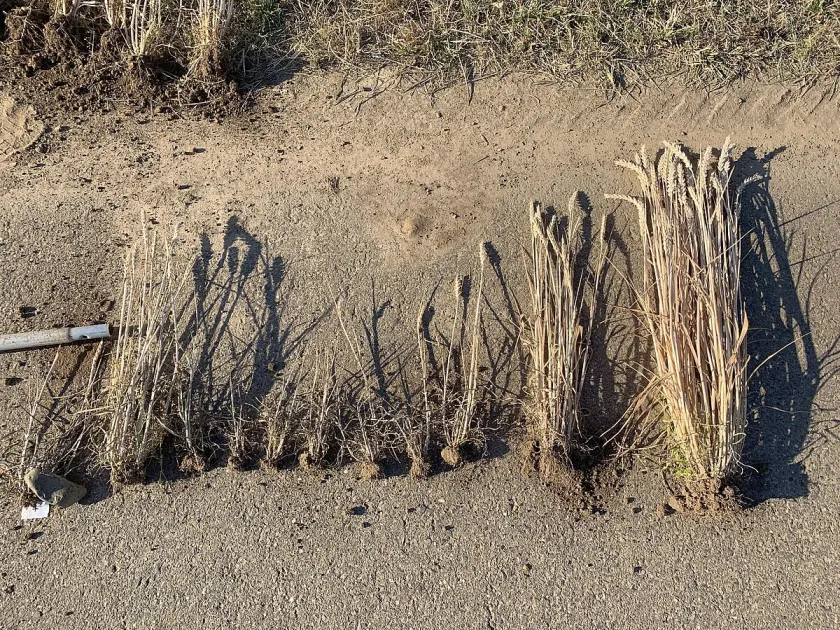
The most characteristic symptom is severe stunting, where affected wheat plants remain significantly shorter than healthy ones, often displaying a bushy appearance.
Foliar symptoms include chlorosis, often appearing as yellowing or reddening of leaf tips and margins. Leaves become rigid, narrower than normal, and exhibit signs of stress.
Tillering is typically abnormal, resulting in an excessive number of weak, stunted shoots that rarely reach the heading stage or produce viable grain.
If heads are produced, they are often small, deformed, or sterile, leading to a substantial decrease in the biological yield of the affected crop.
In the field, infected areas are often patchy, appearing as pockets of stunted, discolored plants, which distinguishes them from the healthy green canopy.
Pathogen
The causal agent of wheat dwarf is the virus Mastrevirus tritici, belonging to the Geminiviridae family. It is a single-stranded DNA virus that affects various cereal crops globally.
The disease is transmitted by insect vectors, primarily leafhoppers, which acquire the virus while feeding on infected plants and transmit it to healthy ones. The virus can persist in the vector for a prolonged period.
Once inside the plant, the virus localizes in the phloem, disrupting nutrient transport and photosynthesis. This systemic infection significantly impairs the physiological function of the host.
While wheat is the primary host, the virus also affects various wild grasses, which act as important reservoirs for the pathogen during the off-season.
The epidemiology of the disease is highly dependent on the population dynamics of the leafhopper vector, making the timing of migration critical for the spread of the disease.
Conditions for development
The development of wheat dwarf is closely linked to the migration patterns of leafhoppers. Warm and moist conditions during the autumn favor the proliferation of these vectors.
Early-sown winter crops are particularly susceptible, as their young seedlings coincide with the peak movement of leafhoppers from mature host plants.
High weed density in and around fields facilitates the survival and reproduction of vectors, increasing the risk of infection in the following crop cycle.
Temperature fluctuations and rainfall patterns influence both the activity of the insects and the incubation period of the virus within the host tissues.
Reduced tillage practices and continuous cropping of cereals can lead to a build-up of the virus and its vectors, exacerbating the disease pressure in the region.
Why it matters
The disease causes significant economic loss by reducing grain weight and quality, often rendering the yield unsuitable for milling and food production.
Stunted plants are more vulnerable to winterkill and other environmental stresses, often leading to a poor plant stand and the need for costly reseeding.
Infection impairs the plant's metabolic capacity, resulting in lower protein and gluten content, which lowers the commercial value of the wheat harvest.
Heavy infestations can lead to a 20-50% reduction in yield, depending on the timing of the infection and the resilience of the specific wheat cultivar.
The systemic nature of the virus makes recovery of the plant impossible, meaning infected individual plants do not contribute to the final crop production.
Protection
Effective management requires an integrated approach, starting with the control of insect vectors using systemic insecticides during the early growth stages of the crop.
Adjusting sowing dates is a strategic measure; delaying winter wheat planting can help crops escape the peak period of leafhopper migration.
Phytosanitary measures, including the eradication of weeds and volunteer cereals around fields, are crucial to removing sources of infection.
Utilizing resistant or tolerant wheat varieties is the most sustainable long-term strategy for minimizing the impact of wheat dwarf in affected areas.
- Seed treatments with systemic insecticides.
- Regular field monitoring for leafhopper activity.
- Maintaining crop rotation to break the infection cycle.
- Removal of wild grass reservoirs around fields.
Discussion
No discussions yet — be the first.