
Wheat Russian mosaic
Bymovirus tritici
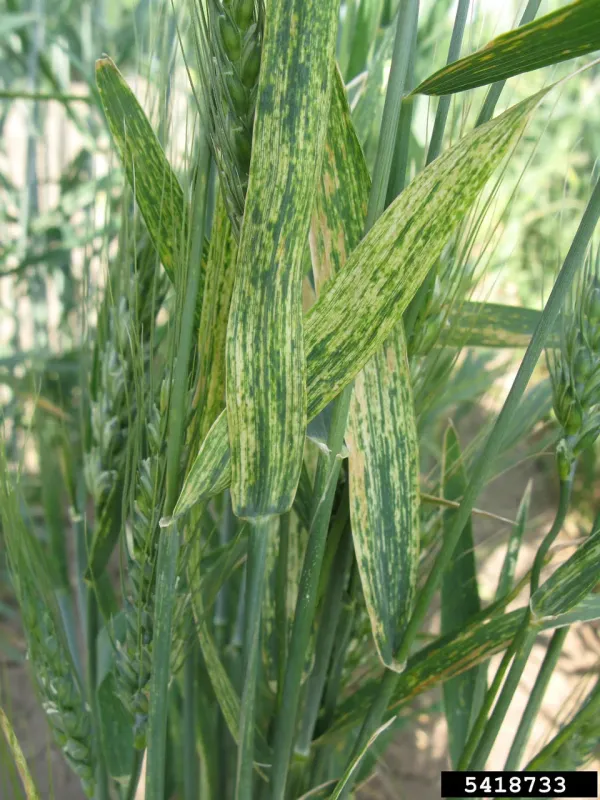
Description
Symptoms
Initial symptoms are characterized by chlorotic streaks and dashes appearing on the leaf blades, which later coalesce to form a distinct mosaic or mottled pattern along the veins.
Infected plants typically show severe stunting, excessive tillering, and a bushy appearance. This stunted growth is a diagnostic indicator, often making the plants appear significantly smaller than healthy ones.
As the disease progresses, the leaves may become curled, yellowed, and eventually necrotic, leading to a general decline in the vigor and health of the crop canopy.
Reproductive development is also hindered, leading to the formation of malformed spikes and shriveled grains, which significantly impacts the overall yield potential of the field.
- Chlorotic streaking and mosaic patterns.
- Severe plant stunting and bushy growth.
- Deformed foliage and leaves.
- Poorly developed spikes and shriveled grain.
Pathogen
The causative agent of this disease is the Wheat Russian mosaic virus (WRMV), which belongs to the genus Bymovirus. This virus contains a single-stranded RNA genome and is characterized by its specific transmission mechanism.
The virus is transmitted by a soil-borne protist, the plasmodiophorid Polymyxa graminis. This organism acts as an obligate vector, injecting the viral particles into the roots of young wheat plants through its motile zoospores.
The virus persists within the resting spores of Polymyxa graminis. These spores are highly resistant to adverse environmental factors and can remain viable in the soil for several years.
Infection primarily occurs when wheat seedlings come into contact with viruliferous zoospores in the soil during autumn. Once inside the plant, the virus spreads systemically throughout the vascular system.
While winter wheat is the primary host, the disease can also affect other cereals such as barley, rye, and various wild grass species, which serve as long-term viral reservoirs.
Conditions for development
High soil moisture is the most critical environmental factor for disease development, as water is essential for the movement and host-seeking activity of Polymyxa graminis zoospores.
Warm and wet autumns provide the most conducive environment for widespread infection, aligning with the germination and seedling establishment phases of winter wheat.
Heavy clay soils or fields with poor drainage are particularly susceptible to high incidence levels of Russian mosaic, as these conditions favor the longevity and activity of the vector.
The virus spreads locally through the movement of infested soil particles, which can be easily transported by farm machinery, footwear, or surface runoff during heavy rainfall.
Continuous cropping of wheat on the same land leads to the accumulation of Polymyxa graminis resting spores in the soil, creating a permanent risk for subsequent seasons.
Why it matters
The primary economic impact of Wheat Russian mosaic is a significant reduction in grain yield, primarily caused by stunted plant growth and poor grain filling.
Infected plants often display reduced cold hardiness, which results in poor winter survival and significant stand loss, often necessitating the reseeding of affected fields.
Grain quality is negatively affected, leading to lower test weights and reduced protein content, which limits the marketability and industrial utility of the harvested crop.
The systemic nature of the virus weakens the host's overall resistance, making infected plants more prone to secondary infections such as root rot and other fungal diseases.
Depending on the intensity of the outbreak and environmental conditions, yield losses can range significantly, causing considerable financial strain on affected farming operations.
Protection
Implementing effective crop rotation is a primary management strategy to disrupt the survival cycle of the virus and its soil-borne vector, ensuring non-host crops are grown periodically.
Selecting and planting resistant or tolerant winter wheat varieties is the most effective and sustainable approach to managing the disease in infested areas.
Adjusting planting dates can minimize the exposure of vulnerable young seedlings to the peak activity periods of the Polymyxa graminis vector during the early growth phase.
Sanitation measures, including the thorough cleaning of agricultural equipment used in infected fields, are essential to prevent the spread of viruliferous soil to non-infested regions.
Improving soil drainage through advanced land management can help reduce excessive moisture, thereby limiting the reproductive success of the vector and the subsequent spread of the virus.
Discussion
No discussions yet — be the first.