
Watermelon mosaic virus
Potyvirus citrulli
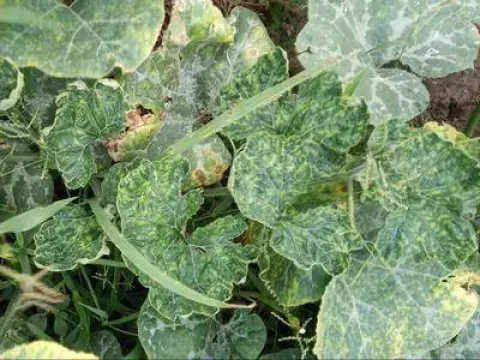
The primary symptoms of Watermelon mosaic virus include a distinct mottle or mosaic pattern on the leaves, with patches of light and dark green coloring.
What the section contains
Watermelon mosaic virus
As the disease progresses, leaves often become severely deformed, crinkled, or filiform (thread-like), significantly reducing their photosynthetic surface area.
Fruit symptoms are highly characteristic and include irregular bumpiness, yellow or green discoloration, and a significant reduction in overall fruit size.
Infected plants display stunted growth with shortened internodes, leading to a compact and bushy appearance that differs markedly from healthy specimens.
In severe cases, plants may show localized necrosis on stems or petioles, which can contribute to the overall decline and collapse of the plant.
The causative agent is the Watermelon mosaic virus (WMV), which belongs to the genus Potyvirus within the Potyviridae family.
The virus consists of flexuous filamentous particles containing single-stranded RNA, which are highly contagious among susceptible host species.
WMV is primarily an aphid-borne virus, and it is transmitted in a non-persistent, non-circulative manner, meaning it is acquired and transmitted within minutes.
The virus does not persist in the soil but relies on reservoir hosts such as perennial weeds to survive during periods when the main crop is absent.
Mechanical transmission also plays a role in the spread of the virus, as contaminated pruning tools or contact between leaves can facilitate its movement.
Outbreaks of the virus are strictly correlated with the migration patterns and population density of aphid species, which serve as the main vectors.
Warm and dry weather conditions generally favor higher aphid activity, accelerating the spread of the virus throughout the field during the growing season.
The presence of wild cucurbits or other weed species near the cultivated area serves as a source of inoculum throughout the spring and summer.
Inadequate sanitation in the fields, such as leaving infected plant debris or ignoring weed control, creates favorable conditions for rapid virus multiplication.
Late-season infections occur more frequently if the surrounding landscape has a high density of host plants that harbor the virus during the winter months.
The primary economic impact of WMV is the significant reduction in marketable fruit quality, as deformed and discolored melons are unacceptable for sale.
Crop yields are severely reduced because plants infected early in development produce fewer flowers and fail to set healthy, high-quality fruit.
The disease reduces the vigor of the plant, making it more susceptible to other secondary pathogens and environmental stressors like drought or heat.
Management costs increase significantly due to the need for frequent insecticide applications to suppress aphid populations in affected areas.
Large-scale production losses can threaten the profitability of farming operations if sensitive varieties are grown without adequate protective measures.
Integrated pest management focusing on the reduction of aphid populations is the cornerstone of controlling the spread of the mosaic virus.
Strict weed control programs aimed at removing alternative reservoir hosts in and around the field are essential for breaking the infection cycle.
The use of reflective mulches or crop covers during the early stages of plant growth can help deter aphids and reduce initial infection rates.
Choosing resistant or tolerant crop varieties is the most reliable strategy for protecting fields in regions where the virus is known to be endemic.
Implementation of good agricultural practices, including cleaning tools after handling infected material, helps prevent mechanical spread within the crop.