
Chicory mosaic virus
Potyvirus chichorii
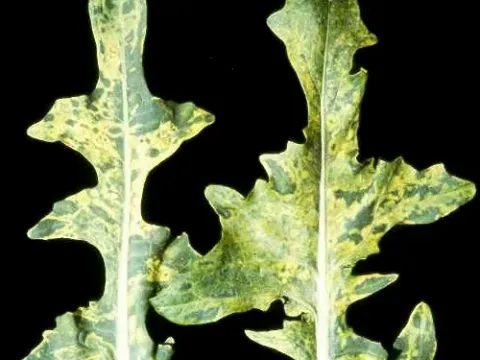
The primary symptom of infection is the appearance of chlorotic spots on chicory leaves, which eventually form a characteristic mosaic pattern. Leaf tissues may take on a yellowish or pale green hue, significantly reducing photosynthetic efficiency.
What the section contains
Chicory mosaic virus
As the disease progresses, leaf deformation often occurs, with leaves becoming wrinkled and underdeveloped. In cases of severe infection, plants show significant stunting, which hinders the proper development of root vegetables.
During the summer, symptoms may be temporarily masked by high temperatures, but the virus continues to spread systemically throughout the plant's vascular tissues. Leaves may yellow and die prematurely, starting from the lower levels of the rosette.
On some chicory varieties, the virus appears as ring spots or necrotic streaks along the veins. Unlike fungal diseases, there is no surface growth or sporulation on these spots.
Visual diagnosis in the field is often difficult due to the similarity of symptoms with other viral mosaics, making serological testing necessary for a definitive diagnosis.
The causative agent of the disease is the Chicory mosaic virus, belonging to the Potyvirus group. It is a plant pathogen characterized by filamentous particles containing single-stranded RNA.
The virus is an obligate parasite that multiplies exclusively within the living cells of the host, utilizing their enzymatic systems to synthesize its own genetic material.
The main reservoirs of infection in nature are perennial wild weeds of the Asteraceae family. The virus is capable of surviving in the roots of perennials throughout the winter period.
The transmission of the virus from infected to healthy plants occurs primarily via persistent or non-persistent pathways through insect vectors. Various species of aphids play the leading role in this process.
In laboratory conditions and during careless handling of crops, the virus can be transmitted mechanically, for example, through contaminated gardening tools during harvesting or maintenance.
The development of the virus is favored by optimal conditions for the reproduction and migration of insect vectors, particularly the dry and warm weather typical of mid-growing seasons.
The presence of wild weeds, such as dandelions or thistles, in the immediate vicinity of chicory plantations creates a constant source of infection from which aphids spread the virus to commercial crops.
Dense plantings create a favorable microclimate for high concentrations of pests, which significantly increases the rate of viral spread across the field.
Unbalanced plant nutrition, especially an excess of nitrogen fertilizers, makes chicory tissues more attractive to sucking pests, accelerating the colonization of the field by vectors.
Timely removal of weed vegetation around field borders is a critical factor in suppressing the onset of epiphytotics during the spring period.
The harmfulness of the virus lies in a sharp reduction in the commercial quality and overall biomass of the harvested chicory roots.
Infected plants show a significant decrease in inulin accumulation, which is critical for the industrial use of the crop in the food and pharmaceutical industries.
Infected plants become more susceptible to secondary bacterial infections, which cause rotting of the roots during storage.
Overall plantation productivity can decrease by 30–50% under mass infection, making the cultivation of the crop economically unviable.
Infection during the early stages of plant development can lead to total seedling loss or the formation of small, unusable roots.
The primary control method is the use of certified seed material that is free from viral infection, as seed transmission is also possible.
Strict aphid control is necessary using systemic insecticides, especially during critical periods of mass migration of insect vectors.
- Spatial isolation of new plantings from older chicory fields.
- Elimination of weed reservoirs of the virus.
- Regular monitoring and removal of infected plants (sanitary roguing).
- Crop rotation excluding Asteraceae family plants for several years.
Disinfection of tools and agricultural machinery before moving from infected plots to healthy ones prevents mechanical spread of the virus.
The adoption of resistant or tolerant chicory varieties remains the most promising protection strategy, minimizing damage even when infection is present.