
Chickpea chlorotic stunt virus
Polerovirus cpcsv
The causative agent is the Chickpea chlorotic stunt virus (CpCSV), classified within the genus Polerovirus. It is a single-stranded RNA virus that specifically infects the phloem tissues of plants.
What the section contains
Chickpea chlorotic stunt virus
A crucial biological feature of this pathogen is that it is not seed-transmitted, meaning the virus must be reintroduced into the field each season by its insect vectors.
The virus relies on alternative hosts, primarily various weed species and perennial legumes, which act as reservoirs and maintain the infection cycle year-round.
The primary vector for CpCSV is the aphid, particularly Acyrthosiphon pisum (pea aphid). The transmission occurs in a persistent, circulative manner after the insect feeds on infected plant sap.
Given the wide host range, the virus can infect other legumes such as lentils, beans, and faba beans, complicating disease management in diverse cropping systems.
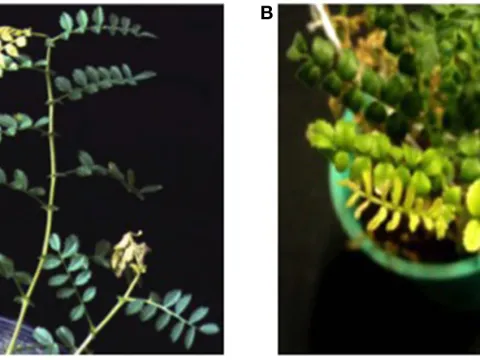
Initial infection is characterized by distinct yellowing or chlorosis of the apical leaves, which gradually spreads to the younger foliage.
A diagnostic visual symptom is the characteristic downward curling of the leaf margins, often giving the chickpea foliage a deformed or "stunted" appearance.
Infected plants show severe growth retardation, with shortened internodes and a overall dwarfed stature compared to healthy plants in the same field.
The virus disrupts normal development, often leading to flower abortion, reduced pod formation, and significantly smaller or shriveled seeds.
- apical leaf chlorosis;
- downward leaf curling;
- severe plant stunting;
- reduced flower and pod production.
The epidemiology of the virus is driven by the population dynamics of its aphid vectors, which are highly sensitive to temperature and moisture fluctuations.
Warm, dry weather conditions tend to accelerate aphid reproduction and migration, leading to rapid expansion of the disease across the field.
The proximity of the chickpea crop to perennial legume fields or unmanaged field margins serves as a high-risk factor for early-season viral outbreaks.
High weed density within and around the field provides the necessary bridge for the virus to survive and move into the crop during the growing period.
Stress factors, such as drought or nutritional imbalances, can exacerbate the visual symptoms of the virus, making the plants more vulnerable to infestation.
The economic impact of CpCSV is severe, with yield losses frequently exceeding 50-70% in highly susceptible chickpea varieties and early-infected fields.
The virus quality impact is also significant, as seed weight, size, and germination potential are adversely affected, rendering the produce of poor market quality.
Plants affected by the virus exhibit reduced vigor and weakened immunity, making them more susceptible to secondary fungal pathogens and environmental stresses.
Direct economic losses stem from both the reduction in marketable yield and the increased cost of insecticide applications aimed at controlling the aphid vectors.
In cases of high disease incidence, the viral infection may render the entire field yield insufficient for harvesting, leading to complete economic loss for the season.
Integrated Pest Management (IPM) focusing on the control of aphid populations is the primary method to prevent the spread of the virus in chickpea fields.
The use of systemic insecticides during the early stages of crop development is critical to minimize the initial infection rate by incoming winged aphids.
Maintaining spatial isolation from perennial legume crops and ensuring thorough control of weeds around field borders are essential preventive strategies.
Selecting and planting resistant or tolerant chickpea cultivars is the most effective and sustainable long-term solution for managing viral stunt diseases.
Regular field scouting for early symptoms and monitoring aphid activity are vital for making timely management decisions and avoiding significant crop loss.