
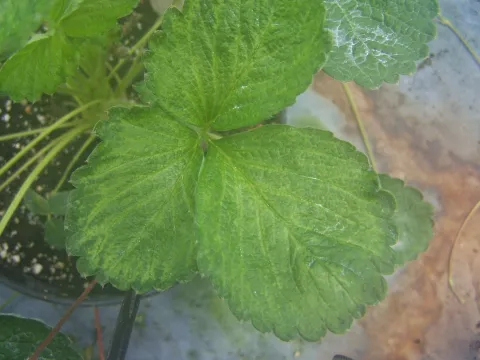
Chilean strawberry (viral degeneration)
Fragaria chiloensis
It is crucial to clarify that Fragaria chiloensis is a plant species, not a disease. However, it often acts as a host for various viruses, most notably the Fragaria chiloensis latent virus (FClV).
What the section contains
Chilean strawberry (viral degeneration)
The disease is caused by systemic viral pathogens that colonize the plant's vascular system, disrupting normal physiological and biochemical processes.
Viruses often persist in a latent state within the host tissues, making it difficult to detect the infection without laboratory diagnostic tools like ELISA or PCR.
These viruses are primarily transmitted through vegetative propagation, as they readily spread from infected mother plants to daughter plants via runners.
Transmission also occurs through insect vectors such as aphids, nematodes, and whiteflies, which acquire the virus while feeding on infected plant sap.
The most common signs include leaf chlorosis, which can manifest as interveinal yellowing, mottling, or specific mosaic patterns across the foliage.
Plants affected by viral degeneration show significant stunting, with reduced internode length, resulting in a compact and bushy appearance of the crown.
Leaf deformation is a hallmark of the infection; leaves may become wrinkled, puckered, or develop irregular margins that curl in an unnatural direction.
Flowering is significantly impaired, with fewer flower stalks produced per plant and blossoms often exhibiting abnormal size and structural distortion.
Fruits produced by infected plants are frequently malformed, undersized, and lack the characteristic sweetness and aroma expected from the species.
Viral spread is heavily dependent on the presence of insect vectors and the proximity of infected plants to healthy nursery stock.
Warm and humid weather conditions stimulate the rapid multiplication of aphids, which act as the primary vectors for many strawberry viruses.
The use of uncertified and untested planting material is the leading cause of viral outbreaks in new fields or commercial plantations.
Environmental stress, such as drought, nutrient imbalance, or root damage from nematodes, exacerbates the visible impact of viral infections.
Weed species surrounding the planting site can harbor both the viruses and the insect vectors, serving as a continuous source of inoculum throughout the season.
Viral degeneration leads to a gradual decline in plant vigor, eventually rendering the entire plantation unproductive within a few growing seasons.
Yield loss is significant, often reaching levels that make the continued cultivation of the affected variety commercially non-viable.
Infected plants show increased susceptibility to secondary fungal and bacterial diseases due to their compromised overall physiological state.
Cold hardiness is markedly reduced, making the strawberry plants prone to winter injury even in regions where they should be well-adapted.
The systemic nature of the infection means that once a plant is infected, it cannot be cured, necessitating the total removal of symptomatic plants.
The primary strategy for management is the exclusive use of virus-free planting material sourced from certified commercial nurseries.
Implement a rigorous rogueing program, where all plants showing any symptoms of viral disease are immediately uprooted and destroyed to prevent spread.
Apply integrated pest management (IPM) practices to control insect vectors, using effective insecticides or biological control agents as needed.
Ensure adequate distance between new plantings and older, potentially infected strawberry beds to reduce the risk of secondary transmission.
- Control weeds that act as alternate hosts for viruses.
- Disinfect pruning tools between plants to prevent mechanical transmission.
- Optimize nutrient management to ensure plant resilience against stressors.