
Chinese wheat mosaic virus
Furovirus chinense
The causal agent is the Chinese wheat mosaic virus (ChWMV), which belongs to the genus Furovirus. The virions are rod-shaped, and the viral genome is bipartite, consisting of two strands of positive-sense single-stranded RNA.
What the section contains
Chinese wheat mosaic virus
It is classified as a systemic viral disease that primarily affects various cereal crops. Unlike many other plant viruses, it is not transmitted by insects in a traditional way but relies on soil-borne biological vectors for movement.
The transmission process is mediated by the plasmodiophorid Polymyxa graminis, a soil-borne protist. The zoospores of this organism carry the virus, facilitating its entry into the roots of the host plant during periods of high soil moisture.
The virus exhibits remarkable stability within the resting spores of its vector. These spores can persist in the soil for many years, acting as a long-term reservoir for the pathogen and complicating management efforts.
While the virus itself shows limited genetic variation, its widespread persistence in the environment makes it a significant concern for cereal production in regions prone to soil-borne viral infections.
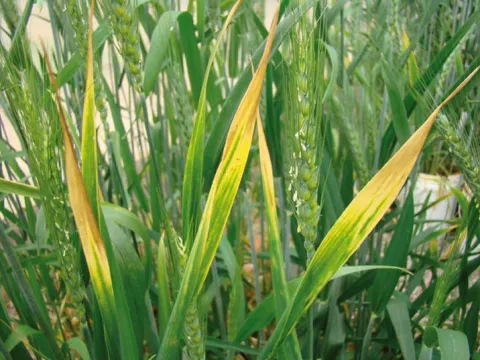
The primary visual symptoms include the development of chlorotic spots, streaks, and mosaic patterns on leaves, which typically emerge during early spring. Severity can range from mild mottling to intense yellowing of the foliage.
Infected crops frequently exhibit stunted growth and reduced vigor. Affected plants often show sparse tillering and a significant decrease in biomass, which can be easily observed when comparing them to healthy, adjacent crops.
The disease often appears in patches within a field, reflecting the uneven distribution of the vector Polymyxa graminis in the topsoil. In advanced stages, leaves may become curled or experience premature necrosis.
Early-season infection during the autumn tillering phase can lead to extreme stunting by the following spring. Visual diagnosis is often supported by clinical tests, as symptoms may overlap with other nutrient deficiencies or viral diseases.
To confirm the presence of the pathogen, diagnostic tools such as ELISA or RT-PCR are utilized to detect viral RNA within the plant tissues, providing an accurate basis for management decisions.
The virus thrives under conditions of cool temperatures and high soil moisture. These environmental factors align with the biological activity of the vector, which requires water to release its infective zoospores.
Heavy, poorly drained soils are particularly conducive to the spread of ChWMV. Such environments maintain the moisture levels required for the motility of the zoospores, facilitating a wider dissemination across the field.
Increased disease incidence is often observed following wet autumns and springs. Prolonged rainfall encourages the survival and migration of the vector, leading to localized epidemics within susceptible wheat varieties.
Continuous cropping of susceptible cereals increases the inoculum potential of the virus in the soil. Over time, this leads to a buildup of the virus, making it difficult to maintain yields in subsequent growing seasons.
Human activities, specifically the movement of soil via machinery, play a crucial role in spreading the pathogen to previously uninfected areas, necessitating strict sanitation protocols.
The primary damage caused by the virus is a significant reduction in overall crop yield. By inhibiting photosynthesis and weakening the plant's metabolic processes, the virus prevents the formation of well-developed spikes.
Severe infestations can result in yield losses ranging from 30% to 50%. This impact is particularly devastating for winter cereal production, where the pathogen can affect the plant throughout its long vegetative cycle.
Infection significantly reduces the cold hardiness of wheat. Infected plants often fail to survive the winter because they have lower concentrations of protective sugars, leading to increased winter-kill rates.
The economic value of the harvest is further diminished by poor grain quality. Reductions in the thousand-grain weight and overall grain density directly translate to lower market value for the producer.
Given the long-term survival of the virus in the soil, the economic burden is cumulative, forcing farmers to implement multi-year strategies to manage the infestation levels.
The most reliable control measure is the use of resistant cereal cultivars. Genetic improvement programs focus on identifying and breeding varieties that can withstand the virus even in high-inoculum soils.
Implementing a proper crop rotation system is essential to manage the pathogen population. By rotating with non-host crops for several years, the levels of the virus in the soil can be gradually reduced.
Strategic timing of sowing can help avoid the most favorable periods for vector activity. Adjusting the planting date can lead to a significant decrease in the incidence of early-stage root infection.
Sanitation of farm equipment is a critical preventative practice. Ensuring that machinery is cleaned before moving from infected sites to clean fields is vital to preventing the spread of the virus.
- Selection and cultivation of resistant varieties.
- Extended crop rotation schedules (minimum 3–5 years).
- Improved soil drainage to limit vector movement.
- Rigorous cleaning of machinery to prevent cross-contamination.