
Cherry rasp leaf
Cheravirus avii
Description
Symptoms
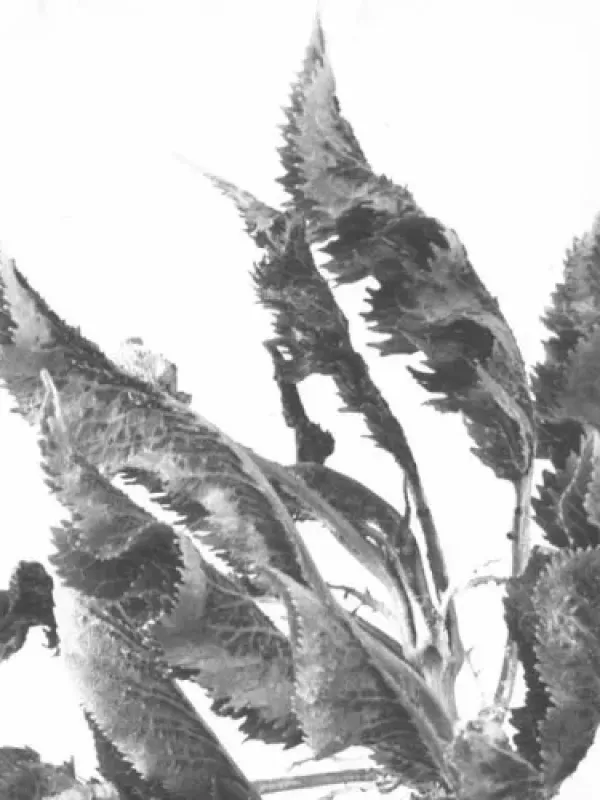
The primary symptom, which gives the disease its name, is the development of rough, rasp-like growths on the undersides of the leaves along the veins.
Leaves on infected trees often become distorted, thickened, and take on a boat-like shape, severely impairing the tree's ability to perform photosynthesis efficiently.
Affected trees typically show signs of severe stunting, with shortened internodes and a bushy growth pattern in certain parts of the canopy that resembles «witches' broom».
Fruit production is drastically reduced; the cherries are often small, misshapen, and fail to ripen properly, leading to significant yield losses for the grower.
In advanced stages, the tree exhibits general decline, including dieback of branches and reduced vigor, eventually leading to the death of the tree after several years of infection.
Pathogen
The disease is caused by the Cherry rasp leaf virus (CRLV), a plant virus belonging to the Cheravirus genus within the Secoviridae family. It is a systemic pathogen that invades the vascular system of the host plant.
The virus acts as an obligate parasite, hijacking the host's cellular machinery to replicate. Once inside, it spreads throughout the entire plant, including the roots, trunk, branches, and fruits, causing chronic infection.
Transmission occurs primarily through the soil-borne dagger nematode, Xiphinema americanum, which feeds on the roots of infected trees and carries the virus to healthy specimens.
Human activity is a major secondary transmission factor, specifically through the use of non-sterilized pruning tools and infected rootstocks used during grafting in orchards.
Once a tree is infected, it becomes a permanent reservoir of the virus, making the removal of the tree the only effective way to prevent the spread to the rest of the orchard.
Conditions for development
The spread of CRLV is closely linked to the population density and activity of the nematode vector, Xiphinema americanum, which prefers moist and temperate soil conditions.
Planting cherry trees in soil that previously hosted infected plants poses a high risk, as the nematodes can remain in the soil and harbor the virus for long periods.
The disease spread is favored by intensive orchard practices without proper sanitation, where infected trees are left in the ground for too long, allowing nematodes to migrate to healthy roots.
Environmental stress, such as poor soil quality or improper water management, can exacerbate the symptoms of the virus, making the trees more susceptible to further damage.
Introduction of the virus into new areas is most commonly linked to the transport of infected nursery stock, which brings the pathogen into clean, healthy environments.
Why it matters
The most severe impact of Cherry rasp leaf is its long-term debilitating effect on the orchard's productivity, as infected trees can never be cured of the virus.
Economic damage is significant due to the loss of marketable fruit and the high cost associated with the removal and destruction of symptomatic trees.
The presence of the virus in the orchard creates a long-term quarantine situation, where the site may be unfit for planting new stone fruit trees for several years.
Beyond individual trees, the virus spreads in a localized fashion, gradually expanding the «dead zones» in the orchard as nematodes continue to feed on root systems.
It poses a wider threat to agricultural biodiversity, as the virus has a broad host range, including various other stone fruits, potentially endangering other orchard segments.
Protection
The most important control measure is to use only certified virus-free nursery stock to ensure that no infection is brought into the orchard at the time of planting.
Regular monitoring of the orchard is essential; any trees showing symptoms of rasp leaf should be uprooted, including the entire root system, to eliminate the virus reservoir.
Strict sanitation protocols must be followed: all pruning tools must be disinfected after every single tree to prevent mechanical transmission of the virus.
Managing the nematode population through pre-plant soil fumigation or the use of cover crops that are non-hosts for Xiphinema can help reduce transmission risk.
While there are no chemical sprays that can cure an already infected tree, maintaining general orchard hygiene and controlling weed hosts can slow the spread of the disease.
Discussion
No discussions yet — be the first.