
Chicory necrotic virus
Nepovirus cichorii
The causal agent is the Chicory necrotic virus, belonging to the genus Nepovirus. It is a spherical RNA virus that infects various plant species, particularly within the Asteraceae family.
What the section contains
Chicory necrotic virus
The virus is notable for its persistence in the soil, where it relies on nematodes as primary vectors. This soil-borne nature makes the virus particularly challenging to eradicate from agricultural land.
Chicory (Cichorium intybus) is the most economically significant host. The virus can persist in perennial weeds, which serve as reservoirs during periods when the crop is not present.
Transmission can occur through seeds, which facilitates the spread of the virus over long distances. This makes strict control of the starting material an essential part of disease management.
The virus particles are roughly 28-30 nm in diameter. Once inside the plant, they multiply in the cytoplasm and spread systemically through the vascular tissues.
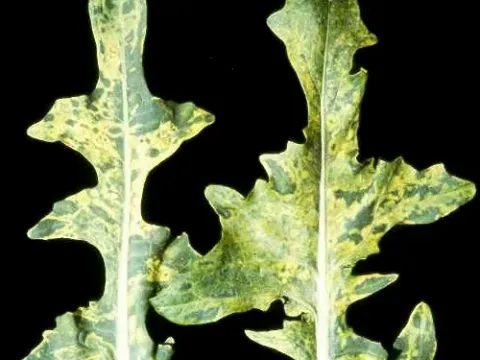
Initial symptoms include chlorotic spots on the leaves. Over time, these spots develop into necrotic lesions, causing parts of the leaf tissue to brown and die.
Stunting of growth is a common characteristic of infected plants. The leaves often show signs of curling, crinkling, and general deformity compared to healthy plants.
Infection affects the taproot, showing internal browning or necrotic ring spots when sliced. This significantly lowers the commercial value of the root crop.
In field conditions, diseased plants exhibit a reduced photosynthetic capacity. This leads to premature wilting, especially under heat stress or drought conditions.
The infection usually spreads in patches. Growers can identify affected areas by the uneven growth of the crop and the discoloration of the foliage.
The development of the virus is highly dependent on the activity of soil-dwelling nematodes. Warm and moist soil conditions promote the movement of these vectors to the root systems.
Intensive monoculture practices contribute to the build-up of the virus in the soil. Constant cultivation of chicory on the same land allows the nematode population to thrive.
Weed populations in and around the fields provide a bridge for the virus to survive throughout the year. Cleaning the field perimeters is essential to limit this spread.
Mechanical operations, such as plowing or cultivating, can move infested soil fragments across the field. This helps spread the virus to previously healthy areas.
Favorable weather conditions, such as high soil moisture during the spring, increase the infection rate as nematodes become more active and start feeding on plant roots.
The primary economic impact is the significant loss in yield and quality. Roots affected by necrotic spots are often rejected for industrial processing.
There is a documented reduction in inulin content in the taproots of infected chicory. This decrease directly affects the quality standards required by manufacturers.
Infected plants exhibit higher susceptibility to secondary infections, including soft rot bacteria. This results in significant post-harvest losses during storage.
Field-wide infestations may necessitate the total abandonment of certain plots for several years, causing major operational disruptions to the farm.
The presence of the virus increases the overall cost of production, as growers must invest in rigorous monitoring and quarantine measures to prevent further spreading.
The most effective strategy is the use of virus-free certified seeds. Preventing the introduction of the virus into a new field is the most important step.
Long crop rotations are necessary to break the cycle of the virus and its nematode vectors. A gap of at least 4-5 years is recommended between chicory crops.
Rigorous weed management helps eliminate alternate hosts for the virus. This significantly reduces the chances of local spread within the crop cycle.
Applying modern agricultural practices that discourage nematode populations, such as soil solarization or the use of cover crops, can be beneficial.
Prompt roguing of symptomatic plants at the first sign of infection can help limit the formation of larger disease patches within the field.