
Peanut mottle virus
Potyvirus arachidis
Peanut mottle virus (PeMoV) is a highly specialized plant pathogen belonging to the genus Potyvirus within the Potyviridae family. The virion consists of flexible filamentous particles containing a single-stranded, positive-sense RNA genome.
What the section contains
Peanut mottle virus
This virus acts as a systemic pathogen, capable of infecting not only the peanut plant (Arachis hypogaea) but also a wide range of other leguminous species, including soybeans, beans, and peas.
Transmission of the pathogen occurs in a non-persistent manner via various aphid species, which acquire and transmit the virus during short-term probing of leaf tissues.
A critical epidemiological factor is the seed-borne transmission of the virus, which enables the pathogen to persist and spread over long distances into new geographic regions.
The virus is also easily transmitted mechanically, making it a significant threat during field operations that involve tissue damage to the crop.
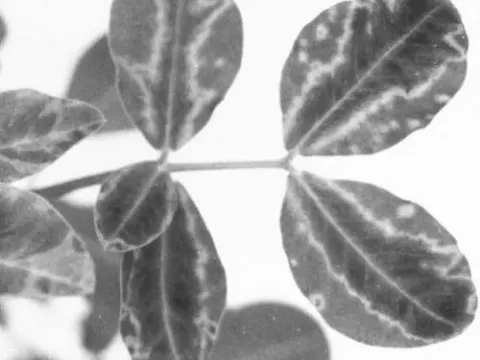
The most characteristic symptom of infection is a mosaic pattern on the leaves, which often manifests as light green mottling or spotted discoloration.
Many peanut cultivars show leaf deformation and a marked reduction in leaf size compared to healthy, vigorous plants.
In some cases, leaf margins may curl inward, giving the plant a stunted and chlorotic appearance during the early stages of development.
The severity of these symptoms is heavily dependent on the host plant's genotype as well as external environmental conditions that impact the crop's metabolic rate.
- Early stages of infection often exhibit latent (hidden) symptoms.
- A typical marbled or mottled pattern develops on leaves later.
- Overall growth and plant development are noticeably slowed.
The economic impact of Peanut mottle virus is primarily due to a significant reduction in plant productivity, which leads to direct crop yield losses.
Infected plants typically show poor pod set, and the resulting pods are often smaller with reduced oil content, affecting overall quality.
The virus disrupts the photosynthetic process, causing premature senescence of the vegetative mass and an imbalance of nutrients within the plant tissues.
In addition to quantitative losses, the quality of seed material is compromised, as infected seeds serve as a primary inoculum source for subsequent growing seasons.
Economic damage is most severe in years favoring aphid population explosions, when widespread transmission occurs during the crop's early vegetative phases.
The development of outbreaks directly correlates with the activity of aphid vectors, whose populations increase under moderate temperatures and adequate humidity.
Early planting dates can often allow plants to escape the peak population of winged aphid migrants, reducing the risk of primary field infection.
The presence of wild legumes and weed reservoirs along field margins provides a habitat for insect vectors and a source of viral inoculum during the off-season.
Temperatures ranging from 20–28°C are considered optimal for viral replication within the host plant cells.
Failure to maintain spatial isolation between peanut fields and other susceptible legumes facilitates the rapid build-up of the infection pressure.
The primary control strategy is the use of high-quality, virus-free seed material that has undergone rigorous laboratory screening.
Systematic weed management is necessary, as weed hosts often act as primary infection centers and temporary refuges for insect pests.
While insecticide applications to control aphids have limited efficacy due to the non-persistent nature of virus transmission, they can help slow down the overall spread.
The selection and breeding of resistant peanut cultivars remain the most reliable long-term strategy for preventing significant economic losses.
Adhering to proper crop rotation and maintaining spatial isolation of new crops from older, infected fields significantly reduces the risk of early-season infection.