
Pear leaf blister mite
Pear bud
Description
Symptoms
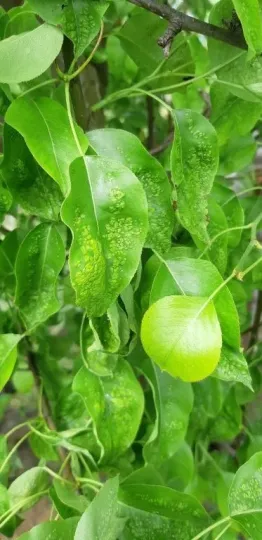
The primary symptom of a pear leaf blister mite infestation is the appearance of small, raised blisters on the upper surface of the leaves. These blisters often start as light green or reddish spots.
As the season progresses, these blisters turn brown or black, eventually becoming dry and necrotic. The leaves may curl or deform significantly, which hinders the tree's overall development and aesthetic appearance.
In cases of severe infestation, the mites can also affect flower buds. This results in poor fruit set, bud abortion, or deformed fruit development, significantly reducing the tree's yield potential.
Under a magnifying glass, tiny holes can often be seen on the underside of the leaves, which are the entry points for the mites. The internal tissue of the leaf within the gall is where the mites feed and reproduce.
Unlike some fungal diseases that produce visible spores, the galls caused by these mites are characterized by internal tissue damage that remains relatively dry and compact throughout the summer months.
Pathogen
The causal agent is the pear leaf blister mite, scientifically known as Eriophyes pyri. These are microscopic, elongated mites that belong to the family Eriophyidae, which are specialized plant parasites.
These mites feed by piercing individual plant cells and sucking out the contents. This mechanical damage, combined with the mite's salivary secretions, induces the host plant to produce abnormal cell growth in the form of galls.
The lifecycle of the mite is closely synchronized with the growth phases of the pear tree. Adult females spend the winter hidden underneath the protective bud scales, remaining dormant until spring temperatures rise.
As the pear buds begin to swell and open, the mites emerge to infest the emerging foliage. Throughout the growing season, multiple overlapping generations can be produced, leading to a rapid buildup of the population.
Dissemination is entirely passive. The mites are transported between trees by wind currents, splashing rain, and through contact with gardening equipment, clothing, or even insects that visit the foliage.
Conditions for development
The development of the pear leaf blister mite is favored by warm and humid conditions. Temperatures between 20°C and 25°C are optimal for the rapid reproductive cycles of this pest within the leaf galls.
Trees with dense, unpruned canopies are particularly susceptible because the reduced airflow creates a more stable, humid microclimate that is ideal for mite colonization and survival during the spring.
A wet spring encourages early activity of the mites, leading to a quicker infestation of the newly formed leaves. This timing is critical, as young leaves are the most vulnerable to the initial colonization.
Over-fertilization, especially with nitrogen, promotes lush vegetative growth. This abundance of tender young foliage provides an ideal food source that can support a larger population density of the mite.
The absence of natural predators, such as predatory mites (Phytoseiidae) and ladybeetles, in the garden ecosystem can lead to uncontrolled mite outbreaks, necessitating human intervention to manage the population.
Why it matters
The primary harm caused by the mite is the impairment of photosynthesis. By damaging the leaf tissue, the mites reduce the tree's ability to produce the sugars necessary for fruit development and winter storage.
Severe infestations lead to premature leaf drop, which weakens the tree. This early defoliation significantly reduces the tree's cold hardiness, making it more vulnerable to winter injury and environmental stress.
Young trees are especially impacted by the pest. The stunted growth and distorted shoots caused by the mites can permanently affect the tree's structure and delay its entry into full commercial production.
The damage caused by the mites often serves as an entry point for secondary infections, including various fungi and bacteria. This combination of stresses can lead to declining tree health and even branch dieback.
Economically, the presence of these mites reduces the overall quality and quantity of the harvest. Growers often face additional expenses for chemical control and increased labor for managing the affected orchards.
Protection
Effective management begins with sanitation. Pruning and destroying heavily infested twigs and branches, especially during the dormant season, is a crucial step in reducing the overwintering population.
Applying dormant sprays, such as sulfur-based products or horticultural oils, in late winter or early spring before bud break can effectively kill the females as they emerge from their wintering sites.
During the growing season, if the infestation is heavy, the application of targeted acaricides is necessary. It is important to use products that are effective against mites while minimizing harm to beneficial insect populations.
Resistance management is essential in orchards. Growers should rotate their acaricides with different modes of action to prevent the mites from developing resistance to common chemical treatments.
Maintaining healthy trees through proper irrigation, balanced nutrient management, and regular thinning of the canopy helps the trees better withstand the stress caused by the mites and aids in rapid recovery.
Discussion
No discussions yet — be the first.