
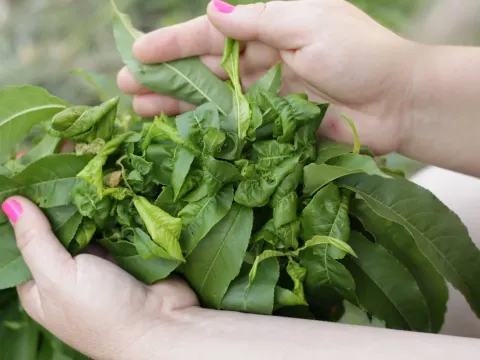
Peach leaf curl
Peach purple
The disease is caused by the fungus Taphrina deformans, which is highly specialized for infecting stone fruit species.
What the section contains
Peach leaf curl
The pathogen exists as yeast-like spores that survive the winter in the crevices of the bark and under the scales of dormant buds.
Once conditions become favorable in early spring, the fungus infects the newly emerging leaves and tender shoots.
Biological infection occurs primarily when the host tissue is susceptible, specifically during the stage of bud break and leaf unfolding.
The fungus produces toxins that disrupt the plant's hormonal balance, leading to the abnormal cell growth characteristic of the disease.
Symptoms typically manifest as reddish or purple-colored, thickened, and curled areas on the developing foliage.
The affected leaves show distinct deformation, turning bloated and often changing to a sickly yellow or brownish hue.
A silvery or powdery substance can often be seen on the surface of the infected leaves during the peak of the infection.
In addition to the leaves, the infection can spread to the twigs, causing them to swell and exhibit stunted growth patterns.
Severe infestations lead to massive defoliation, leaving the branches bare and vulnerable to sunburn during the summer months.
Cool, moist weather conditions throughout the spring are the primary drivers for a widespread outbreak of peach leaf curl.
Temperatures ranging from 10 to 15 degrees Celsius combined with frequent precipitation favor the rapid development of spores.
Orchards located in low-lying areas or those with high humidity levels are significantly more prone to severe disease pressure.
Poor orchard hygiene, such as leaving infected plant debris on the ground, allows the pathogen to persist and re-infect trees year after year.
Lack of proper thinning and pruning creates dense canopy structures that retain moisture and inhibit air circulation, increasing infection risk.
The primary impact is the loss of photosynthetic capacity, which leads to weak trees and significantly reduced fruit yield.
Defoliation forces the tree to expend stored energy to produce a second set of leaves, which drains its reserves for the following season.
Fruit quality is severely compromised, with affected fruits often being small, deformed, or dropping prematurely from the branches.
Persistent infection makes the tree highly susceptible to secondary attacks by pests and other opportunistic diseases.
Without intervention, the cumulative effect of the disease can lead to the decline of the tree and premature death within a few years.
Preventative chemical control, specifically copper-based fungicides, is the standard and most effective practice when applied during dormancy.
Timing is critical: the application must be completed after leaf fall in autumn and before the buds start to swell in late winter.
Sanitation practices, including the removal and destruction of infected leaves and twigs, help reduce the overall fungal spore load.
Encouraging tree health through proper fertilization and irrigation helps trees recover from leaf loss and maintain vitality.
- Apply copper fungicides during the dormant winter period.
- Remove and destroy all infected plant material.
- Maintain a well-pruned canopy for better air circulation.