
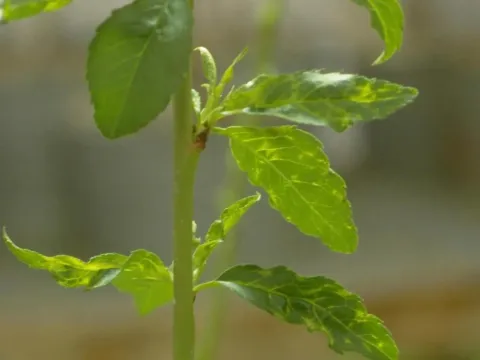
Peach mosaic
Ilarvirus pmv
Peach mosaic is caused by the Peach mosaic virus (PMV), a member of the Ilarvirus genus within the Bromoviridae family.
What the section contains
Peach mosaic
The virus particles are small, isometric, and contain a single-stranded RNA genome that integrates into the plant's vascular system.
It is a systemic disease, meaning once the tree is infected, the virus spreads through the phloem to all parts of the plant, including roots and fruits.
Transmission occurs primarily through the use of infected grafting material, which is a common practice in conventional propagation.
Pollen transmission has also been documented, making it possible for the virus to spread from infected trees to healthy ones during the flowering season.
The most distinctive symptom is a mosaic pattern on the leaves, characterized by irregular yellow or light green mottling and chlorotic stripes.
Severe infections can lead to the malformation of leaves, resulting in crinkling, puckering, or uneven edges on the leaf blade.
Affected trees often exhibit delayed or stunted growth, with shorter internodes that give the branches a bushy or rosette appearance.
Fruits from infected trees are frequently smaller, deformed, and may show bumpy surfaces or irregular ripening patterns.
In many cases, the symptoms are masked or absent in certain varieties, making infected trees dangerous asymptomatic carriers.
The development of the disease is closely linked to horticultural activities, particularly grafting and budding in commercial nurseries.
Warm spring weather provides ideal conditions for pollen transmission, as increased insect activity aids in the cross-pollination of infected flowers.
Poor orchard sanitation, such as failing to disinfect pruning tools, allows the virus to be moved mechanically from tree to tree.
Environmental stress, such as drought or poor soil management, can exacerbate the visible symptoms and weaken the tree's immune response.
The virus persists indefinitely in the woody tissues of the host, surviving through winter dormancy and reappearing during each growing season.
Peach mosaic significantly reduces the economic lifespan of an orchard, often requiring the premature removal of affected trees.
The yield reduction can be severe, not only in terms of fruit quantity but also in the degradation of fruit size and market quality.
Trees infected with the virus are less vigorous and more susceptible to environmental stress, including frost damage and secondary fungal infections.
The accumulation of the virus over time leads to a steady decline in tree productivity, making it impossible to maintain a profitable orchard.
In nurseries, the presence of this virus can lead to large-scale losses, as young saplings may develop symptoms early, making them unsellable.
The cornerstone of management is the use of virus-indexed, certified nursery stock to ensure that only healthy trees are introduced into the orchard.
Rigorous orchard inspection programs should be implemented to identify and rogue out (remove) any trees showing symptoms of mosaic immediately.
Strict disinfection protocols for all pruning and grafting tools are essential, using appropriate chemical agents to neutralize viral particles.
Preventing the movement of grafting wood from unknown or potentially infected sources is crucial to maintaining orchard health.
While there are no curative chemical treatments for the virus, maintaining overall tree vigor through proper fertilization and irrigation can help prolong the life of partially affected orchards.