
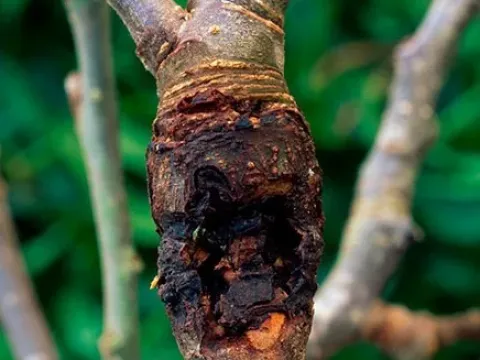
Pear bark necrosis
Pear bark
The primary symptom of pear bark necrosis is the appearance of discolored, sunken areas on the trunk or main branches, often ranging from brown to dark gray.
What the section contains
Pear bark necrosis
As the disease progresses, the infected bark dries out, becomes brittle, and eventually cracks, revealing the underlying wood that may also show signs of decay.
In the spring, one might observe the oozing of sap (gummosis) from the affected areas, which acts as a response to tissue infection and internal stress.
The canopy of the affected tree often exhibits chlorosis, followed by premature leaf drop, as the nutrient transport system is compromised by the necrotic lesions.
Tiny black fruiting bodies of the fungi may emerge on the surface of the dead bark, serving as the primary source for further spore dispersal across the orchard.
Pear bark necrosis is primarily caused by opportunistic fungal pathogens, including species like Cytospora leucostoma and Neofabraea species.
These fungi are weak parasites that typically infect trees through open wounds, such as pruning cuts, frost cracks, or sunscald damage on the bark.
Once inside, the mycelium colonizes the phloem and cambium tissues, secreting toxins that break down plant cells and disrupt essential transport functions.
The pathogens thrive in humid conditions, which facilitate the release of spores from the fungal fruiting bodies during rainy or damp periods.
The fungal infection can persist within the necrotic tissue for several years, ensuring a continuous supply of spores to infect new, healthy tree tissues.
The development of the disease is heavily favored by environmental stress factors, particularly extreme winter cold and sudden spring temperature fluctuations.
Poor orchard hygiene, such as leaving large pruning wounds untreated, significantly increases the likelihood of fungal colonization in the tree bark.
High relative humidity and stagnant air within a dense canopy create an ideal microclimate for the germination and spread of fungal spores.
Inadequate soil nutrient levels, specifically a lack of balanced fertilization, result in weak tree growth and impaired bark healing capabilities.
Excessive moisture retention on the bark surface, due to poor drainage or thick growth, promotes the survival and activity of the necrotic pathogens.
The disease severely impacts the tree's vascular system, hindering the movement of water and nutrients, which ultimately causes branch dieback.
Long-term infestation reduces the overall vigor of the pear tree, making it significantly more susceptible to other pests and secondary infections.
Yield production is drastically curtailed, leading to poor fruit development, reduced storage life, and a high percentage of unmarketable produce.
Severe necrosis can lead to the death of the entire tree, necessitating costly removal and replanting of the infected orchard block.
Economic losses arise not only from reduced fruit production but also from the increased cost of intensive management and disease control measures.
Management focuses on prevention through good sanitation, including the careful removal and destruction of all infected wood and bark tissue.
Applying copper-based fungicides during the dormant period is an effective strategy to reduce the pathogen population before the growing season begins.
Ensuring proper orchard maintenance, such as regular pruning and adequate fertilization, helps maintain robust tree health and natural defense mechanisms.
Painting trunks and major branches with white latex-based paint helps prevent sunscald, a common entry point for bark-necrotic fungi.
- Sterilize all pruning tools with a disinfectant solution after working on infected trees.
- Seal large pruning wounds immediately with appropriate protective wound dressing.
- Improve orchard air circulation through correct spacing and thinning of tree canopies.
- Monitor the orchard frequently for early signs of bark discoloration or cracking.
- Select resistant pear varieties when planning new orchards to minimize long-term risks.