
Peanut necrosis
Orthotospovirus arachinecrosis
Description
Symptoms
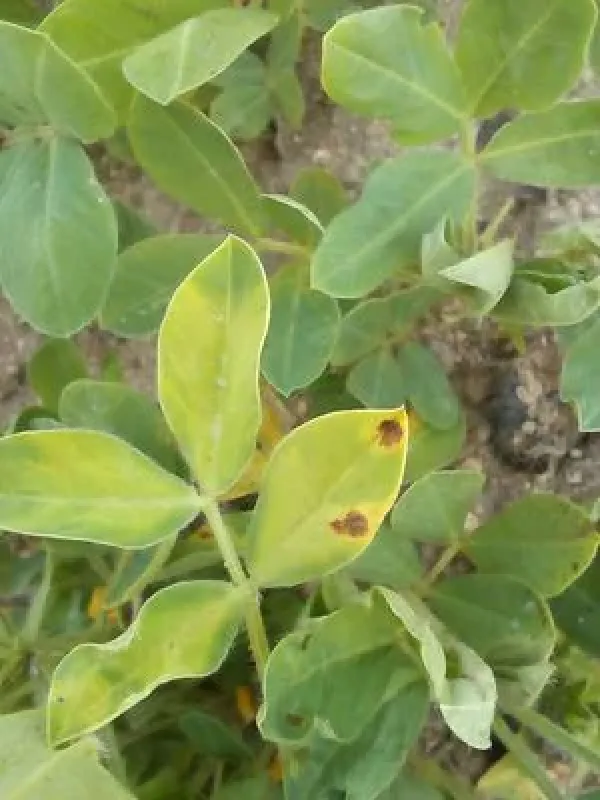
The initial symptoms of peanut necrosis manifest as chlorotic spots or a mosaic pattern on young leaves. Over time, these areas develop into distinctive necrotic rings, which are a diagnostic hallmark of this viral genus.
A characteristic symptom is the overall stunted growth of the affected plant. Plants appear dwarfed with shortened internodes, and leaf petioles are often deformed, giving the plant a typical rosette appearance.
As the infection progresses, necrotic lesions (tissue death) appear on the leaves, rapidly merging into large, dark patches. Consequently, the foliage dries out completely and drops off prematurely.
The infection also affects the plant's reproductive organs. Pod development is poor, resulting in shriveled peanuts with deformed shells and darkened seeds, which significantly reduces the quality and marketability of the yield.
In cross-sections of stems or roots of infected plants, one can often observe browning of the vascular bundles, caused by cell death in response to the systemic viral impact, often mistaken for fungal wilt.
Pathogen
The causative agent of the disease is the peanut necrosis virus, belonging to the Orthotospovirus genus. This viral pathogen consists of spherical virions enclosed in a lipid envelope, rendering it highly vulnerable outside the host plant or vector.
The virus is primarily transmitted by insect vectors, specifically various species of thrips. During feeding, the insect injects saliva containing viral particles into the peanut tissue, successfully initiating the systemic infection.
This disease is categorized as a systemic viral infection, where the pathogen moves rapidly through the phloem. This movement leads to the infection of all plant organs, including roots, leaves, and developing pods.
The virus life cycle is closely linked to the vector's life cycle. Thrips acquire the virus during their larval stages and remain infectious throughout their adult life, serving as a continuous threat to the crop.
The pathogen is characterized by a segmented RNA genome. This structure allows for high variability, making the development of resistant peanut cultivars a challenging task in regions with a high infection pressure.
Conditions for development
The development of the disease is directly dependent on the population density of thrips. Outbreaks are most frequent during warm and dry weather conditions, which favor rapid reproduction and active migration of the insect vectors.
The spread of the virus is more intense when weeds are present around the field edges. Weeds serve as natural reservoirs for the virus, allowing it to survive during the off-season before the peanut crop emerges.
Favorable conditions for infection are also created by improper crop rotation, where peanuts are grown on the same plot for several consecutive years. This promotes the accumulation of overwintering thrips in the soil and plant debris.
Temperatures exceeding 25 degrees Celsius accelerate the metabolism of both the plant and the insect, leading to a shortened incubation period for the virus and a more rapid appearance of external symptoms.
Agricultural practices that result in overcrowded plantings create a microclimate with high humidity, which, while not a direct requirement for the virus, promotes the survival and movement of vectors within the lower plant canopy.
Why it matters
The harm caused by peanut necrosis is primarily reflected in a critical reduction in crop productivity. Early-stage infections can lead to total crop failure, resulting in 100% yield loss in localized areas of the field.
The virus suppresses the photosynthetic process, disrupting the plant's energy balance. This leads to underdeveloped pods and reduced oil and protein content in the seeds, making them unsuitable for food processing.
Beyond quantitative damage, the disease causes significant qualitative losses. Seeds obtained from infected plants often have poor germination rates, making them unusable as planting material for the following season.
Economic losses are compounded by the costs of additional insecticide applications, which are necessary to manage vector populations during the peak flight periods of the insects.
The presence of viral diseases like peanut necrosis often creates barriers to agricultural exports, as many countries impose strict phytosanitary regulations to prevent the spread of these pathogens across borders.
Protection
The primary method of control is the use of certified, virus-free seeds. This approach prevents the initial introduction of the pathogen into a clean field through infected planting material.
Effective management requires strict control over thrips populations. The application of systemic insecticides during the early stages of peanut growth can significantly reduce the risk of infection by breaking the transmission chain.
Crucial agricultural practices include the thorough elimination of weeds not only within the fields but also in the surrounding areas. This deprives the virus of its natural reservoirs and lowers the overall infection pressure.
Maintaining spatial isolation between new plantings and areas where disease outbreaks have been recorded is a mandatory measure to prevent large-scale infections in new seasons.
- Adoption of resistant peanut cultivars.
- Adherence to optimal planting dates to avoid peaks in thrips activity.
- Careful removal and destruction of crop debris after harvest.
- Use of light traps to monitor vector activity and forecast risks.
Discussion
No discussions yet — be the first.