
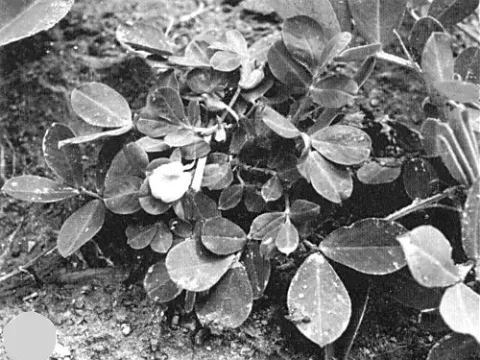
Peanut clump virus
Pecluvirus arachidis
The causal agent of the disease is the Peanut clump virus (PCV), which belongs to the genus Pecluvirus. It is a virus with a rod-shaped particle structure containing single-stranded RNA.
What the section contains
Peanut clump virus
The virus is characterized by its soil-borne mode of transmission. It is obligately transmitted by the plasmodiophorid fungus Polymyxa graminis, which resides in the soil.
The virus particles survive within the resting spores (cystosori) of the fungus, allowing it to persist in the soil for many years even in the absence of a host crop.
Infection is initiated when roots of germinating peanut seeds come into contact with viruliferous zoospores released from the fungal cysts in the soil moisture.
Once inside the host, the virus spreads systematically, affecting the vascular tissues and severely disrupting the normal physiological processes of the peanut plant.
Stunting is the most characteristic sign of the disease, resulting in plants that are much smaller and more compact than healthy ones.
Leaves often exhibit symptoms of dark green mosaic, chlorotic mottling, or distinct streaking patterns depending on the susceptibility of the peanut variety.
Internode shortening is frequently observed, giving the infected plants a characteristic bushy or "clumped" appearance, which is the origin of the common name.
The root system of infected plants is typically poorly developed, which prevents proper nutrient uptake and leads to overall physiological weakness.
Infected plants show a marked reduction in flower production and pod development, leading to significant physiological stress during the reproductive phase.
Disease development is highly dependent on the activity of the fungal vector Polymyxa graminis, which thrives in moist, heavy soil environments.
The movement of viral zoospores through the soil is facilitated by high levels of soil moisture and moderate temperatures, typically between 20°C and 25°C.
The virus spreads within and between fields primarily through the movement of infested soil particles, often via farm machinery, flooding, or irrigation water.
Areas with poor drainage or a history of frequent flooding are at a higher risk of severe outbreaks due to the life cycle requirements of the fungus.
Monoculture of peanut crops in contaminated fields leads to the rapid build-up of the viral inoculum in the soil over consecutive growing seasons.
Peanut clump virus is a major constraint to peanut production, capable of causing substantial yield losses, sometimes resulting in total crop failure in highly infested fields.
The virus causes malformation of pods and reduces their quality, making the harvested produce commercially unattractive and unsuitable for industrial processing.
Plants affected by the virus are more susceptible to secondary infections and environmental stresses, further exacerbating the losses incurred by farmers.
The systemic nature of the infection means that once a field is contaminated, the virus is nearly impossible to eradicate, impacting long-term land utility for peanut cultivation.
The disease contributes to uneven maturation and growth across the field, making mechanical harvesting difficult and inefficient.
The most viable control measure for Peanut clump virus is the deployment of resistant or tolerant peanut cultivars developed through breeding programs.
Implementing long-term crop rotation schemes using non-host species is essential to suppress the fungal vector population in the soil profile.
Improving field drainage and soil management practices can help reduce the conditions that favor the movement and survival of the fungus.
Strict sanitation protocols for farm equipment must be followed when moving machinery from infested fields to clean areas to prevent further virus dissemination.
- Utilizing clean, certified, and virus-free seed stock.
- Implementing weed control to eliminate potential alternative viral hosts.
- Regular monitoring of fields for early signs of stunting and mosaic symptoms.