
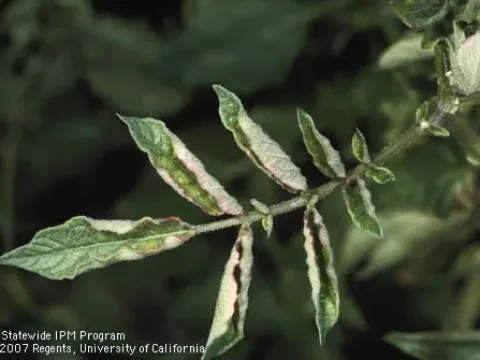
Potato leafroll virus
Polerovirus tvdv
The causal agent is the Potato leafroll virus (PLRV), a member of the Polerovirus genus. It is a phloem-limited virus containing single-stranded RNA.
What the section contains
Potato leafroll virus
The virus cannot be transmitted mechanically through sap or plant contact. Instead, it relies entirely on biological vectors for transmission between host plants.
The primary vector is the green peach aphid (Myzus persicae). Aphids acquire the virus after feeding on infected plants and remain infectious for the rest of their lives.
PLRV survives the winter in infected tubers used as seed potatoes, which ensures a constant reservoir of the virus at the beginning of each planting season.
Once inside the plant, the virus moves systemically throughout the phloem, causing significant physiological distress and altering nutrient translocation pathways.
The hallmark symptom is the upward rolling of leaves, starting from the lower leaflets, which become thick, leathery, and rigid to the touch.
Leaves often exhibit chlorosis or, in some varieties, an anthocyanin-based purplish discoloration at the margins of the leaflets.
Infected plants display distinct stunting and reduced canopy size compared to healthy specimens, making them easily identifiable in the field.
Tuber symptoms, particularly in specific varieties, may include net necrosis of the vascular tissue, which compromises the quality of the harvested crop.
The rolling becomes more pronounced as the season progresses, affecting both yield and the overall aesthetic and structural integrity of the potato plant.
The spread of PLRV is favored by warm, dry weather conditions that support the rapid population growth and migration of aphid vectors.
Mass migration of winged aphids during the early growth stages of the potato crop creates high-risk periods for primary viral infection across the field.
Using infected seed potatoes from previous harvests is the most significant factor contributing to the establishment and persistence of the virus in new fields.
Weedy environments around the farm act as alternative hosts for both the virus and the aphid vectors, facilitating the survival of the pathogen between seasons.
Dense planting patterns and poor spatial isolation between fields contribute to faster transmission rates by increasing the surface area for aphid movement.
PLRV is a highly destructive disease capable of causing yield losses ranging from 30% to 80% if plants are infected early in the growing season.
Infected plants produce fewer and smaller tubers, directly impacting marketability and profitability for the grower, regardless of the variety grown.
The presence of net necrosis in tubers significantly lowers quality standards, rendering the produce unsuitable for fresh market or processing purposes.
Long-term cultivation using infected seed leads to severe variety degeneration, eventually making the crop non-viable and requiring total replacement of seed stocks.
Plants weakened by the virus have compromised defenses, making them more susceptible to secondary infections from other bacterial or fungal pathogens.
The most effective management strategy is the use of high-quality, certified, virus-free seed potatoes produced through tissue culture techniques.
Implement a rigorous roguing program to remove and destroy any symptomatic plants as soon as they are spotted to prevent further spread.
Systematic insecticide applications are necessary to manage aphid vector populations, especially during periods of high migration pressure.
Maintain spatial isolation between seed potato production fields and commercial table potato fields to reduce the likelihood of cross-infection.
Practice integrated weed management to eliminate potential reservoir hosts and reduce the local populations of vectors near the potato crop.