
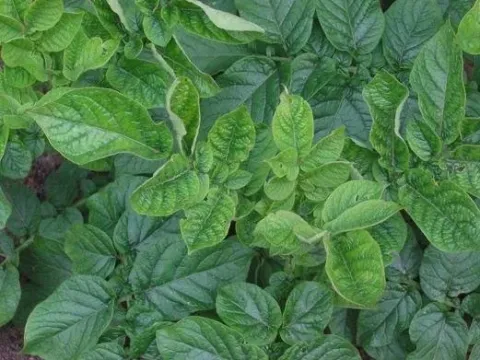
Potato leafroll
Polerovirus plrv
The causal agent of this disease is the Potato leafroll virus (PLRV), which belongs to the genus Polerovirus. It is a severe viral disease that affects the entire plant systemically.
What the section contains
Potato leafroll
This virus is a phloem-limited pathogen, meaning it resides and replicates specifically within the plant's vascular tissue, disrupting the translocation of nutrients.
The primary vector for the transmission of PLRV is the aphid, specifically Myzus persicae. The virus is acquired by the aphid after feeding on infected plant sap.
PLRV is a persistent virus, meaning once an aphid acquires it, it remains infectious for the rest of its life and transmits the virus to healthy plants.
The infection is maintained and spread over long distances primarily through the use of infected tubers as seed potatoes for subsequent planting seasons.
The most distinctive symptom is the upward rolling of the leaflets on the upper leaves of the plant, which often become leathery, stiff, and brittle.
Plants infected from seed tubers show early symptoms, including stunting, chlorosis, and the upward curling of the lower leaves throughout the entire canopy.
In many cases, the leaves exhibit an anthocyanin pigmentation, turning a reddish or purplish color, especially in cultivars with darker-skinned tubers.
The plant growth is typically stunted, and the root system is often poorly developed compared to healthy plants, leading to a visible reduction in vigor.
In some susceptible potato varieties, the tubers produced by infected plants may develop net necrosis, characterized by brown strands in the tuber flesh.
The spread of the virus is heavily dependent on the population density of aphid vectors in the surrounding environment during the growing season.
Warm and dry weather conditions are highly favorable for aphid reproduction and activity, increasing the likelihood of rapid virus transmission across the field.
The presence of volunteer potato plants and other solanaceous weeds acts as a reservoir for the virus, allowing it to persist throughout the year.
Lack of isolation between commercial potato fields and seed potato plots facilitates the movement of infected aphids from one area to another.
The use of infected, non-certified seed potatoes is the primary factor driving the disease cycle within any specific agricultural region or farm.
PLRV causes a significant reduction in tuber yield, often resulting in smaller and fewer tubers per plant, which drastically decreases overall productivity.
The virus impairs the plant's ability to perform photosynthesis and allocate carbohydrates to the tubers, leading to lower starch content and poor quality.
Net necrosis in tubers significantly reduces their storage shelf life and marketability, making the produce unsuitable for fresh consumption or processing.
Degeneration of potato cultivars due to continuous infection leads to severe economic losses and the necessity for frequent seed stock replacement.
The disease negatively impacts the aesthetic and biological value of the potato crop, often making entire harvests unsuitable for seed certification.
The most critical control measure is the use of high-quality, certified, virus-free seed potatoes that have been tested and verified as disease-free.
Implementing regular field inspections and roguing (the removal and destruction of symptomatic plants) helps reduce the primary sources of inoculum.
Systemic insecticide programs aimed at controlling aphid populations are essential to prevent the spread of the virus from infected to healthy plants.
Developing and planting resistant or tolerant potato cultivars is the most sustainable approach to managing the risks associated with the Potato leafroll virus.
- Strict spatial isolation between fields
- Aggressive management of volunteer plants
- Use of early-maturing varieties to escape aphid peaks
- Application of reflective mulches to deter aphids