
Potato spindle tuber viroid
Pospiviroid machoplantae
The causative agent of this disease is the Potato spindle tuber viroid (PSTVd). Unlike viruses, this pathogen consists solely of a short, circular, single-stranded RNA molecule without a protein coat.
What the section contains
Potato spindle tuber viroid
This viroid is highly infectious and can replicate rapidly within the host plant cells, causing systemic infection that affects all parts of the potato plant, including tubers and foliage.
PSTVd is recognized as a serious quarantine pest in many countries. Its high environmental stability allows it to persist on agricultural machinery, storage equipment, and contaminated plant debris.
It primarily infects Solanaceous crops, including potatoes and tomatoes. Additionally, many ornamental plants can act as asymptomatic reservoirs, facilitating the hidden spread of the pathogen.
Transmission occurs through mechanical contact, such as contaminated pruning tools, machinery, and handling, as well as through infected seed tubers and various insect vectors like aphids.
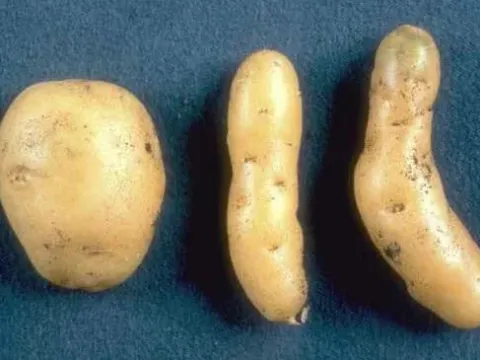
The most distinctive symptom is the severe deformation of tubers. They become elongated, cylindrical, or spindle-shaped, often appearing stunted and significantly smaller than healthy tubers.
Tubers often exhibit a rough or cracked skin surface, and the eyes may appear more numerous and prominent, giving the potato a knobby or distorted appearance that reduces its market value.
Above-ground, infected plants show stunted growth. The stems tend to grow at a sharper angle, giving the plant an upright, spindly, and compact architecture compared to healthy plants.
Leaves become smaller, thicker, and often curl inward or show rugosity. In some cases, a reddish or anthocyanin discoloration may appear on the terminal leaflets, even in varieties that do not typically display this trait.
The severity of symptoms often increases over successive generations of seed. Many plants may show mild or no visible symptoms, leading to silent propagation of the viroid in seed stocks.
PSTVd development is favored by high temperatures and dry weather conditions, which promote the rapid multiplication and systemic movement of the viroid within the plant tissues.
The primary factor for disease spread within commercial fields is human activity. The use of shared tools and the cutting of seed tubers without proper sanitization are the most common ways the viroid is introduced.
Insect vectors, including aphids and leafhoppers, play a role in spreading the viroid from nearby weeds or infected volunteer plants to the healthy potato crop.
Soil can harbor the viroid through infected plant residue, although it is primarily spread through contact rather than soil-borne transmission in the traditional sense.
Increased light intensity often makes the characteristic visual symptoms more pronounced, which is an important diagnostic indicator for field inspectors to identify infected clusters.
The primary economic impact is the severe loss of tuber quality. Deformed potatoes fail to meet commercial standards and are rejected for human consumption or processing purposes.
Yield reduction is significant, with weight losses often exceeding 50% in heavily infected fields, directly impacting the profitability of the potato farming operation.
Infected stock is unsuitable for use as seed potatoes. Continued planting of infected material leads to complete degeneration of the cultivar and potential collapse of the harvest over time.
PSTVd-infected plants have compromised overall health, making them more susceptible to secondary infections and rot, which further increases storage losses.
As a quarantine organism, the presence of PSTVd can trigger strict trade restrictions, preventing farmers from exporting their produce and causing substantial financial disruption.
The foundation of management is the exclusive use of certified, disease-free seed potatoes that have been tested using RT-PCR or other highly sensitive molecular diagnostics.
Strict sanitation of all agricultural equipment is mandatory. Pruning tools, planters, and cutting knives must be disinfected with bleach or other virucidal agents between each plant or tuber contact.
Implement an aggressive roguing program to identify and remove symptomatic plants early in the season, ensuring that both the plant and the surrounding soil are cleared.
Control of insect vectors through integrated pest management (IPM), including timely insecticide applications, is essential to minimize the secondary spread during the growth season.
Practice crop rotation by avoiding Solanaceous plants in the same field for at least three to four years to ensure that any remaining infected crop debris has fully decomposed.