
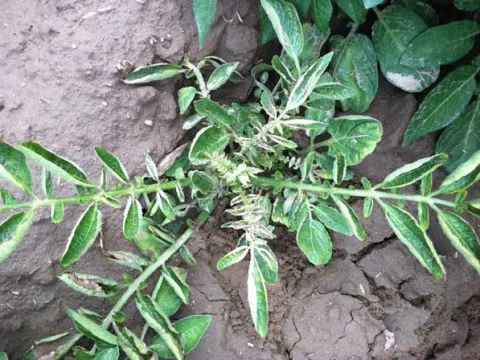
Potato stolbur
Potato leaflet
The disease is caused by the phytoplasma Candidatus Phytoplasma solani, an intracellular prokaryote that colonizes the phloem tissue of host plants.
What the section contains
Potato stolbur
This pathogen lacks a cell wall and moves throughout the vascular system, effectively disrupting the plant's ability to transport nutrients and photosynthates.
The primary vector for the disease is the planthopper Hyalesthes obsoletus, which acquires the phytoplasma while feeding on infected weed reservoirs.
Stolbur is a systemic disease, meaning once a plant is infected, the phytoplasma colonizes all parts, including leaves, stems, and tubers.
The pathogen thrives in perennial weeds like bindweed (Convolvulus arvensis), which act as a permanent source of infection in agricultural landscapes.
The most distinctive symptom appears during flowering, characterized by the purple or reddish discoloration of the upper leaves and apical shoots.
Affected leaves tend to be smaller, chlorotic, and exhibit an upward curling along the midrib, leading to stunted overall plant growth.
The plant often develops an abnormal, bushy habit due to the excessive growth of axillary shoots, a condition frequently described as witches' broom.
Flowers may become deformed, with greenish petals that fail to develop properly, drastically reducing the fertility of the potato plant.
Tubers formed by infected plants are often small, thin, and may show internal vascular browning or necrotic spots when sliced.
The development of potato stolbur is heavily favored by hot and arid weather conditions, which promote the activity and migration of the planthopper vector.
The proximity of potato fields to permanent grasslands or areas infested with perennial broadleaf weeds significantly increases the risk of infection.
High population densities of Hyalesthes obsoletus during the crop's sensitive vegetative stages are the main drivers of severe disease outbreaks.
Inadequate weed management in non-crop areas allows the vector populations to thrive and maintain the phytoplasma reservoir throughout the season.
Using infected seed tubers for planting introduces the pathogen into new areas, where the local insect vector population then spreads it to healthy plants.
Potato stolbur causes significant yield losses, as infected plants produce very few, low-quality tubers that are often unsuitable for human consumption.
Infected tubers have a very poor storage life and are prone to premature sprouting, making them commercially inviable for market or long-term storage.
Seed potato lots contaminated with the phytoplasma lose their vigor and productivity, leading to total yield failure if reused in subsequent seasons.
The disease can lead to total destruction of the field in high-pressure years, creating a major economic threat to large-scale potato production.
Stolbur management is difficult and costly, as it requires both vector control and intensive sanitation of the surrounding environment.
Successful management relies on an integrated approach, starting with the elimination of weed reservoirs like bindweed around the field boundaries.
Implementing a strict rotation program and ensuring large spatial distances between potato crops and potential host weed patches is essential for prevention.
Systemic insecticides should be applied during the peak migration periods of the planthoppers to prevent the spread of the phytoplasma to healthy crops.
Only certified, disease-free seed material should be planted, and regular field inspections are necessary to remove and destroy symptomatic plants promptly.
- Selection of resistant potato varieties.
- Integrated weed management in field margins.
- Strategic insecticide application against vectors.
- Continuous monitoring of planthopper populations.