
Potato spindle tuber viroid
Pospiviroid alphairesinis
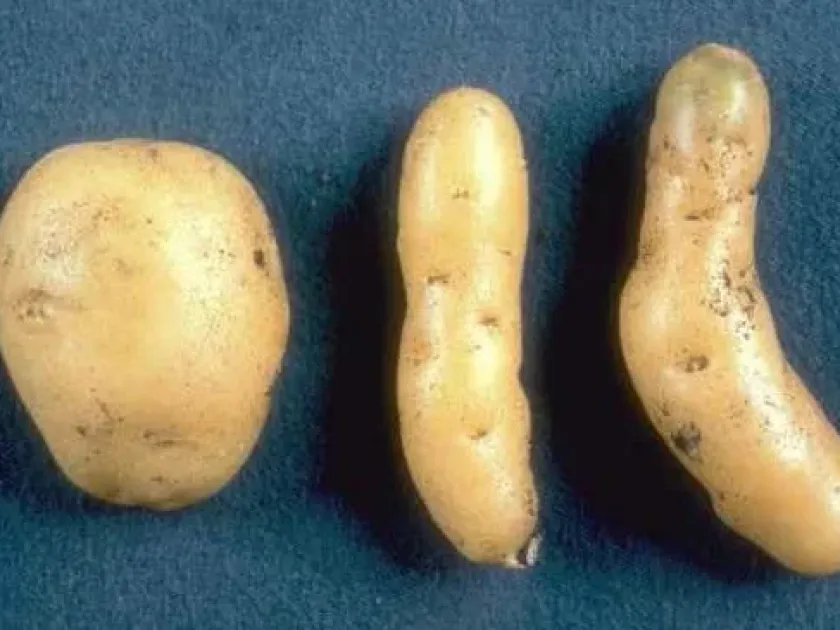
Description
Symptoms
The most characteristic symptom is the distortion of potato tubers, which become elongated, spindle-shaped, or pear-shaped. The surface often displays prominent cracking and a dull, rough appearance compared to healthy tubers.
Above-ground, infected plants exhibit stunted growth and a distinctive upright habit. Leaves are smaller than usual and may curl or twist, giving the plant a rigid, broom-like appearance due to the narrow angles between stems.
Foliage may show chlorosis or purple discoloration, especially on the upper leaves. As the infection progresses, the overall vigor of the plant declines, leading to premature senescence of the vines.
Flowering is frequently suppressed or aborted. Buds may drop before opening, which is a common indicator of a systemic viral-like infection that drains the plant's metabolic resources.
Internally, tuber tissues may appear normal initially, but severe infections can lead to vascular necrosis, which renders the produce highly susceptible to storage rots and reduces its overall market quality.
Pathogen
The pathogen is Pospiviroid alphairesinis, a circular, single-stranded RNA molecule without a protein coat. It is considered one of the smallest and most resilient infectious agents in the plant kingdom.
Unlike viruses, viroids do not encode proteins. They rely entirely on the host plant's enzymes for replication, which takes place in the cell nucleus and interferes with normal genetic regulation and protein synthesis.
This pathogen is exceptionally stable in the environment. It can persist for long periods in soil, contaminated plant debris, and on farm machinery, making it a persistent threat in agricultural settings.
Potato is the primary host, but the pathogen also affects tomatoes, peppers, and eggplants. This cross-infectivity between Solanaceous crops makes crop rotation strategies more complex and crucial.
Transmission occurs primarily through mechanical contact. Any interaction involving contaminated tools, machinery, or even human contact during cultivation can easily spread the viroid to healthy plants.
Conditions for development
PSTVd thrives in warmer conditions. Temperatures between 25°C and 30°C facilitate the rapid replication of the viroid RNA within the plant tissues, leading to more pronounced symptom expression in summer.
Cultural practices are a major driver of spread. Frequent mechanical weeding, pruning, and cultivation practices provide constant opportunities for the viroid to enter through small wounds on the foliage or stems.
The use of infected seed tubers is the primary cause of long-distance transmission. Because the pathogen is systemic, it easily persists through successive generations of vegetatively propagated crops.
High-density planting increases the frequency of plant-to-plant contact. During windy or rainy weather, the brushing of leaves against each other facilitates the transfer of the pathogen in a field.
Continuous cropping of susceptible varieties without adequate sanitation or rotation creates a reservoir of infection in the field, making the management of the viroid increasingly difficult over time.
Why it matters
The viroid causes significant yield losses, which can range from 30% to 60% depending on the severity of the infection and the susceptibility of the cultivar being grown.
Marketable quality is severely degraded. Distorted tubers fail to meet commercial standards and are often rejected by retailers and processing plants due to their unappealing shape and poor processing characteristics.
Chemical and biochemical properties of the potatoes are altered, leading to lower starch content and inferior frying/boiling qualities, which limits their use in food production.
For seed potato production, the presence of PSTVd is devastating. The entire seed stock can be disqualified and must be destroyed to prevent the further spread of this quarantine pathogen.
Long-term infestation of fields leads to substantial economic losses, forcing farmers to invest in costly sanitation procedures or abandon the cultivation of susceptible crops in those areas.
Protection
The use of certified virus-free seed tubers is the most effective preventive measure. Only stock produced via tissue culture and verified by laboratory testing should be used for planting.
Strict sanitation protocols must be enforced. All tools, such as cutting knives and planting equipment, should be sterilized using appropriate chemical solutions to prevent mechanical transmission between plants.
Regular field inspection is essential to identify and rogue out infected plants. Any suspected plants should be removed, including their root systems, and destroyed away from the field.
Implementing a proper crop rotation that avoids Solanaceous crops for several seasons can help reduce the soil-borne inoculum level, although this is only one part of an integrated strategy.
Effective pest management is necessary to control insect vectors like aphids, which, while not the primary spreaders, can play a minor role in disseminating the viroid within a crop during the growing season.
Discussion
No discussions yet — be the first.