
Potato leafroll virus
Polerovirus scylv
The causal agent is the Potato leafroll virus (PLRV), which is the type species of the genus Polerovirus. It is a persistent, circulative, aphid-transmitted plant virus that poses a significant threat to global potato production.
What the section contains
Potato leafroll virus
The primary vector for transmission is the green peach aphid (Myzus persicae), although other aphid species can also transmit the virus. Transmission is circulative, meaning the virus must be ingested by the aphid and circulate through its body before being injected into a healthy plant.
PLRV is strictly phloem-limited, meaning it resides and replicates only in the plant's vascular tissue. This restriction disrupts the translocation of sugars, leading to the accumulation of starch in the leaves rather than the tubers.
Infection is primarily introduced into a field via infected seed tubers. Once the plant germinates, the virus spreads systematically throughout the foliage as it grows during the season.
Besides potatoes, the virus has a host range that includes other Solanaceous plants such as tomatoes, peppers, and various weed species that act as reservoirs for the virus and its vectors.
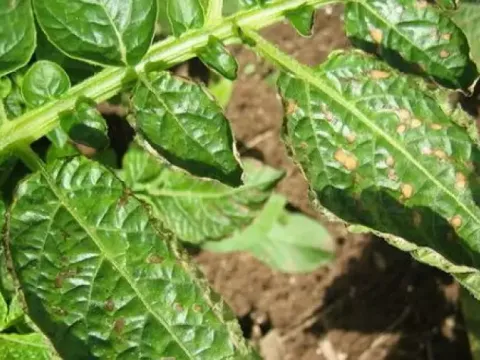
The hallmark symptom is the rolling of the margins of the upper leaves upward along the midrib, giving the foliage a distinct "rolled" or tubular appearance. The leaves often become stiff, leathery, and brittle to the touch.
In plants grown from already infected seed tubers (primary infection), the lower leaves exhibit the most severe rolling and chlorosis, often accompanied by a stunted overall plant height.
Plants infected during the growing season by aphids (secondary infection) primarily show symptoms on the younger, upper leaves. Rolling might be less severe but still characteristic enough for diagnostic purposes.
Affected plants often appear smaller and paler than healthy ones. In some sensitive varieties, the leaves may show a purplish or reddish discoloration, signaling a severe disruption in plant metabolism.
The most devastating internal sign, often referred to as "net necrosis," appears as brown streaks or spots of necrotic tissue in the vascular ring of the tubers, rendering them unsuitable for market.
The spread of PLRV is highly dependent on the population dynamics of its aphid vectors. Warm, dry weather conditions provide the ideal environment for aphid reproduction and rapid colonization of potato fields.
The intensity of the virus transmission increases significantly when aphid migration occurs during the early stages of potato growth, leading to higher rates of primary infection.
Planting density plays a role in disease spread; high-density fields can create a microclimate that encourages the movement of aphids between adjacent plants, facilitating a rapid epidemic.
The presence of weeds, particularly those in the Solanaceae family, provides essential "green bridges" for aphids to overwinter and carry the virus from one growing season to the next.
Agricultural practices, such as the use of infected, uncertified seed potatoes, are the primary factor in the establishment and spread of the disease in new or existing potato fields.
PLRV causes substantial yield losses, which can vary from 30% to over 70% depending on the infection timing, the susceptibility of the cultivar, and environmental conditions throughout the year.
The economic impact is compounded by the reduction in tuber quality. Besides the overall loss in tonnage, the development of net necrosis makes tubers visually unappealing and unusable for commercial processing like chipping.
Long-term consequences include the rapid degeneration of potato lines. Farmers who save their own seed without professional certification often see a decline in yield and vigor over consecutive seasons due to virus buildup.
Viral infection suppresses the plant's immune response, making it significantly more susceptible to other biotic stresses, such as fungal pathogens, and abiotic stresses like drought or heat.
The combination of smaller tuber size and internal tissue browning creates significant losses in the post-harvest chain, forcing growers to discard large portions of their marketable harvest.
The most effective management strategy is the exclusive use of certified, virus-free seed potatoes. Regularly sourcing fresh seed is crucial for maintaining yield potential and disease-free fields.
Effective aphid control is essential, particularly during the early growing stages. The application of systemic insecticides can help manage vector populations and reduce the risk of secondary infections.
Rogueing, or the systematic removal of plants showing visual signs of leafroll, is a critical practice. Infected plants must be destroyed or removed from the field promptly to prevent further insect-mediated spread.
Establishing adequate spatial isolation between seed potato production fields and commercial potato fields can minimize the risk of virus influx from neighbouring plots.
Implementing good weed management and early vine killing at the end of the season helps reduce the aphid reservoir and prevents the translocation of the virus into developing daughter tubers.