
Description
Symptoms
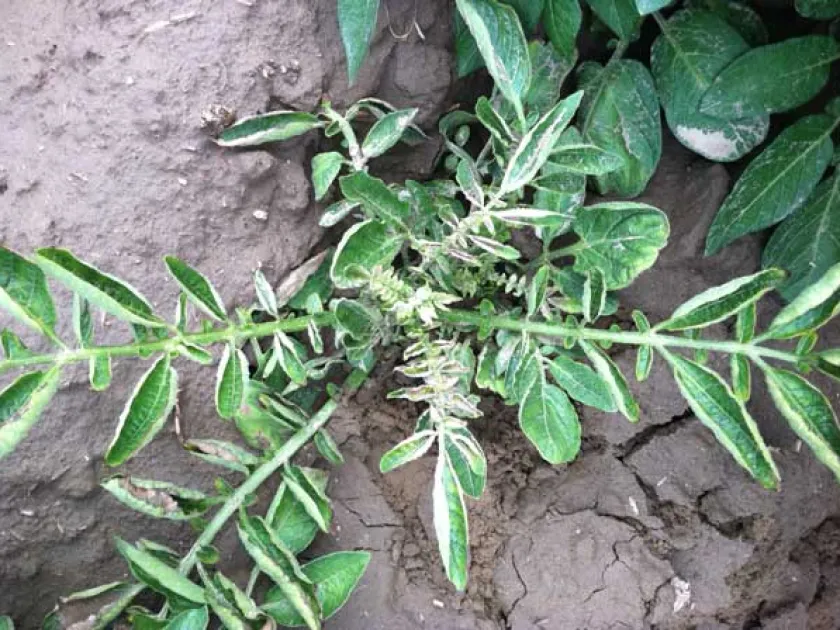
Primary infection typically presents as chlorosis and upward rolling of the leaflets, particularly on the upper leaves of the plant, which often develop a brittle, leathery texture.
Secondary infection, originating from infected seed tubers, manifests as more severe rolling of leaves across the entire plant, starting from the lower leaves and moving upwards.
Infected plants exhibit stunted growth, shortened internodes, and a general bushy appearance, which is a direct consequence of reduced nutrient transport due to phloem damage.
A diagnostic internal symptom, known as "net necrosis," can be observed in the tubers of certain potato varieties, characterized by brownish discoloration of the vascular tissue.
The severity of symptoms varies greatly depending on the cultivar susceptibility, environmental conditions, and the timing of infection during the crop's development cycle.
Pathogen
The causal agent of the disease is the Potato leafroll virus (PLRV), which belongs to the genus Polerovirus. It is a single-stranded RNA virus that specifically colonizes the phloem tissue of host plants.
PLRV is an obligate parasite that overwinters in infected potato tubers, which serve as the primary source of the inoculum when planted in the following growing season.
The virus is transmitted by phloem-feeding insects, primarily aphids such as the green peach aphid (Myzus persicae), in a persistent, circulative, and non-propagative manner.
Once an aphid acquires the virus by feeding on an infected plant, it remains viruliferous for the rest of its life, effectively acting as a long-term vector within the field.
The virus has a narrow host range primarily targeting plants in the Solanaceae family, with potatoes being the most economically significant crop impacted by this pathogen.
Conditions for development
The development and spread of PLRV are closely linked to the population dynamics of its aphid vectors, which thrive in favorable weather conditions during the growing season.
Warm and dry weather patterns promote rapid aphid multiplication and flight activity, increasing the efficiency of viral transmission across and between fields.
Poor weed management acts as a significant contributor to disease spread, as wild solanaceous plants often harbor the virus and support aphid populations before potato emergence.
The use of infected seed potatoes is the most common factor leading to the establishment and long-term buildup of the virus within a farming system or a specific region.
High-density planting and the lack of spatial isolation from older or symptomatic potato plots significantly facilitate the movement of vectors and the subsequent infection rate.
Why it matters
PLRV infection causes substantial economic losses, with yield reductions ranging from 50% to 80% depending on the infection level and the susceptibility of the chosen potato cultivar.
Beyond quantity, the quality of the harvested tubers is severely compromised; they are often undersized, misshapen, and exhibit reduced starch content and culinary value.
The systemic nature of the virus leads to the rapid degeneration of potato stocks, necessitating frequent replacement of seed lots to maintain viable production levels.
Tubers affected by net necrosis are undesirable for fresh market consumption and are highly prone to storage rots, causing further post-harvest losses for growers.
Furthermore, infected plants demonstrate increased vulnerability to other stressors, complicating overall crop management and reducing the profitability of agricultural operations.
Protection
The cornerstone of management is the use of high-quality, certified, virus-free seed tubers, which are produced in controlled environments and regularly tested for pathogens.
Rigorous field sanitation, including the prompt roguing and destruction of symptomatic plants, is essential to reduce the primary inoculum pressure within the field.
Effective management requires systemic insecticide applications to control aphid populations, particularly during the early stages of plant development when the crop is most vulnerable.
Integrated weed control strategies aimed at eliminating alternative host plants significantly reduce the availability of the virus and the insect reservoir throughout the season.
Planting resistant or tolerant potato varieties is a highly recommended long-term strategy to minimize the impact of PLRV and reduce dependence on chemical control methods.
Pathogens and affected parts
Affects crops · 1
Discussion
No discussions yet — be the first.