
Cucurbit aphid-borne yellows virus
Polerovirus cabyv
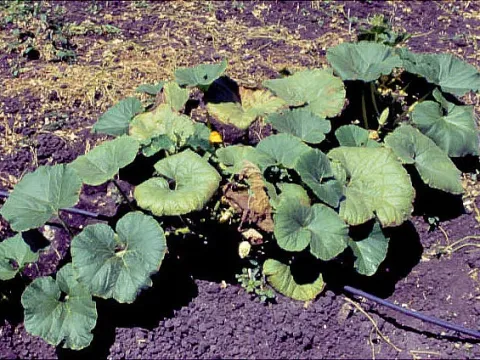
The primary symptom of this viral infection is interveinal chlorosis, where leaves turn yellow while the veins remain distinctively green.
What the section contains
Cucurbit aphid-borne yellows virus
As the disease progresses, the chlorotic symptoms start from the older basal leaves and gradually move upwards to the middle canopy of the plant.
Infected leaves often become thicker, brittle, and leathery, with margins that frequently roll downwards, giving the plant a stunted and rigid appearance.
Plant development is significantly hindered, characterized by shortened internodes and a substantial reduction in the production of lateral side shoots.
Fruit set is severely impaired; the flowers may abort, and any developing fruits are usually small, malformed, and of poor commercial quality.
The disease is caused by the Cucurbit aphid-borne yellows virus (CABYV), a member of the genus Polerovirus within the Luteoviridae family.
It has a specific host range that includes major cucurbits such as cucumbers, melons, squashes, and watermelons, causing significant agricultural losses globally.
CABYV is transmitted in a persistent, circulative manner, meaning the virus is acquired by aphids after feeding and persists inside the insect for life.
The cotton aphid (Aphis gossypii) and the green peach aphid (Myzus persicae) are recognized as the most efficient vectors for this virus.
The virus cannot be transmitted mechanically through sap or via infected seeds, making the aphid vector the exclusive pathway for field infection.
The rate of virus spread is highly correlated with the population dynamics of aphid vectors, which thrive in warm and dry environmental conditions.
Weed hosts, such as various wild cucurbit species, act as crucial reservoirs that maintain the virus during periods when commercial crops are not present.
Fields situated near areas with continuous cucurbit cultivation or abundant weeds are at a much higher risk of experiencing early and severe infection outbreaks.
Increased usage of nitrogen fertilizers can promote lush foliage, which attracts higher numbers of aphids and consequently accelerates the viral transmission cycle.
The migration of alate (winged) aphids is the primary factor responsible for the rapid, long-distance dispersal of the virus across planting blocks.
The economic impact of CABYV is profound, often resulting in significant yield losses reaching up to 50% depending on the timing of the infection.
Infected crops suffer from reduced photosynthetic efficiency, leading to premature senescence and a drastic reduction in the overall harvest window.
Beyond quantity, the quality of the fruits is severely degraded, making them commercially unviable due to poor taste and unsightly physical deformations.
Management costs increase substantially as growers are forced to implement more frequent and intensive pest control programs to curb the spread of vectors.
The virus forces producers to manage their farms more strictly, often leading to the abandonment of heavily infested fields to protect neighboring healthy crops.
Effective management requires an integrated pest management (IPM) approach centered on disrupting the interaction between aphids and the host plants.
Sanitation practices, such as the removal of host weeds from field borders and headlands, are essential to eliminate the primary sources of inoculum.
Early-season protection using physical barriers like row covers can prevent initial colonization by aphids, effectively delaying or preventing infection.
Chemical control must be applied strategically to keep aphid populations below the economic threshold without promoting insecticide resistance.
- Utilize resistant or tolerant cucurbit cultivars where available.
- Deploy yellow sticky traps for monitoring aphid migration patterns.
- Practice crop rotation and spatial isolation from older, infected fields.
- Rogue and dispose of symptomatic plants promptly to reduce the viral load in the field.