
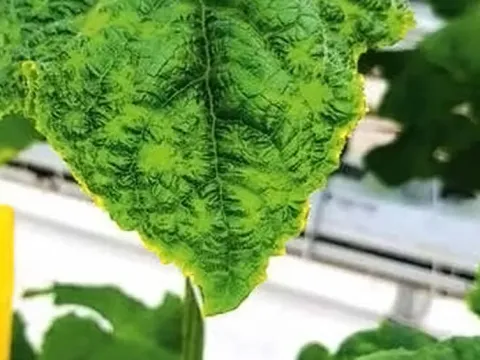
Cucumber toadskin
Cucumber toadskin
The most prominent sign of cucumber toadskin is the severe deformation of the fruit. The skin develops a bumpy, warty texture that resembles the skin of a toad, rendering the cucumber unmarketable.
What the section contains
Cucumber toadskin
Plants affected by the disease exhibit stunted growth and shortened internodes. The overall canopy appears sparse and underdeveloped compared to healthy cucumber plants.
Leaf symptoms typically manifest as mosaic patterns with light green or yellow mottling. Leaves may become leathery, crinkled, or exhibit distorted shapes as the virus disrupts plant development.
Flower abortion and fruit drop are common as the plant loses its ability to sustain healthy growth. Developing ovaries frequently turn yellow and wither before reaching a marketable size.
As a systemic disease, the symptoms appear progressively on all newly formed foliage and fruit, signaling that the entire vascular system is compromised by the viral infection.
The causative agent is primarily the Cucumber mosaic virus (CMV), a highly contagious and widespread plant virus known for its broad host range among vegetable crops.
The virus persists in the roots of perennial weeds, which act as a reservoir throughout the winter and during the non-growing season, ensuring constant reinfection.
Aphids are the primary vectors of the virus. When they feed on the sap of infected plants, they acquire the virus particles and transmit them to healthy plants within minutes.
Mechanical transmission is another significant pathway. The virus spreads through gardening tools, contaminated clothing, and even direct contact between leaves during pruning or harvesting.
The biological nature of the virus makes it highly mobile within the host plant, quickly reaching the growing points and inducing morphological changes in fruit and leaf tissues.
Fluctuating temperatures and heat stress significantly increase plant susceptibility to the virus. Rapid transitions between day and night temperatures weaken the plant's physiological defenses.
High populations of insect vectors, particularly aphids, in the immediate vicinity of the greenhouse or field are the main drivers of rapid disease outbreaks.
Neglecting weed management creates an ideal environment for virus survival. Weeds provide the necessary shelter for aphids to multiply and bridge the infection gap between seasons.
Poor ventilation and high humidity in greenhouses promote the migration of insect vectors between plants, facilitating the rapid spread of the pathogen throughout the entire crop area.
Inadequate sanitation protocols, such as using unsterilized tools after working with symptomatic plants, serve as a direct catalyst for spreading the virus across the farm.
The primary economic impact is the total loss of fruit quality. Deformed cucumbers cannot be sold for fresh consumption, leading to severe financial losses for growers.
The virus drastically reduces the productive lifespan of the plant, causing early senescence. Once infected, a plant rarely recovers and ceases to be a productive part of the crop.
Severe infections can lead to a complete crop failure, as the systemic nature of the virus ensures that every single fruit produced after the infection will be damaged.
The disease weakens the host plant, making it more vulnerable to secondary infections and opportunistic pathogens, which further increases the cost of crop management.
Implementing management strategies for cucumber toadskin requires intensive labor, including the removal of diseased plants and systematic disinfestation, increasing operational costs.
Effective management begins with strict vector control. Applying systemic insecticides to manage aphid and whitefly populations is essential to reduce the rate of virus transmission.
Sanitation is paramount: all weed hosts must be eradicated from the area to eliminate the environmental reservoirs of the virus that enable primary infection.
Implement strict hygiene protocols for staff and equipment. Tools must be disinfected after use on each plant or row to prevent mechanical transmission of the viral particles.
Early identification and rogueing of infected plants are critical. As soon as symptoms appear, affected plants should be removed and destroyed to limit the spread to neighboring healthy plants.
- Selection of virus-resistant hybrids
- Isolation of cucumber fields from potential weed reservoirs
- Use of insect-proof netting in greenhouses
- Regular monitoring for insect vector populations