
Cucumovirus
Cucumovirus
Description
Symptoms
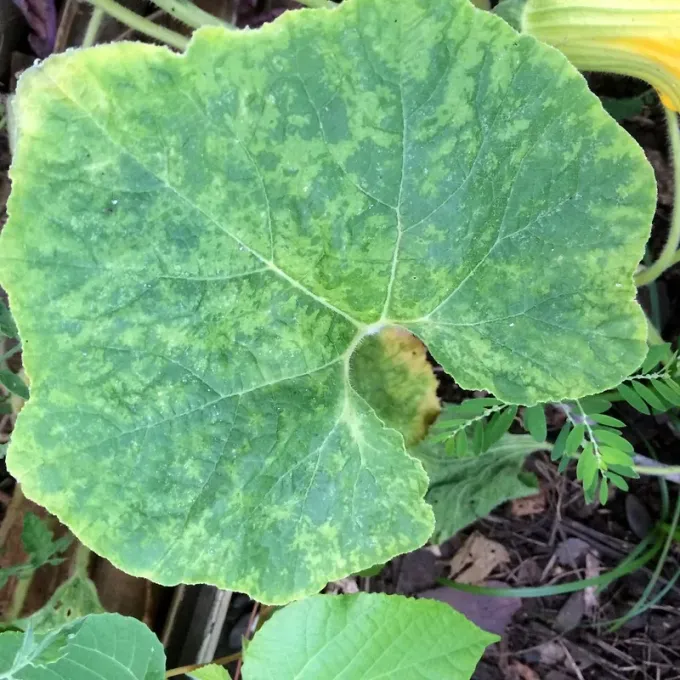
The hallmark of Cucumovirus infection is a mosaic pattern on the leaves, characterized by alternating patches of light green, yellow, and dark green tissue. Leaves often exhibit distortion, wrinkling, or a fern-like appearance.
In cucumbers, the disease manifests as chlorotic spotting, star-shaped patterns on the leaves, and stunted plant growth. Internode length is typically reduced, giving the plant a compact appearance.
Fruits from infected plants are often severely deformed, showing "mottled" or spotty discoloration. They frequently develop a bumpy or warty surface texture, making them unsuitable for fresh market sales.
Reproductive success is severely impaired, with many infected plants showing reduced flower production, poor fruit set, and significant flower drop, directly limiting overall yield.
In severe infections, systemic necrosis of the stem and leaf tissue occurs, leading to the rapid decline and eventual death of the affected plant, especially if infection occurs at an early growth stage.
Pathogen
Cucumovirus is a genus of plant viruses, with Cucumber mosaic virus (CMV) being the most widespread and economically significant member. These viruses consist of positive-sense single-stranded RNA enclosed in an icosahedral capsid.
These viruses are characterized by an exceptionally broad host range, infecting over 1,200 plant species across hundreds of families. As obligate parasites, they rely entirely on the host plant's cellular machinery for replication.
Transmission in the wild is primarily mediated by insect vectors, most notably aphids, which transmit the virus in either a non-persistent or persistent manner. Mechanical transmission through contact with contaminated tools or plant surfaces also occurs frequently.
Outside of a living host, the virus has limited environmental stability. However, it effectively persists in the roots and rhizomes of perennial weeds, which serve as primary reservoirs during the winter months.
The high mutation rate of the viral RNA genome facilitates the rapid evolution of new strains, allowing the virus to adapt to changing environmental conditions and bypass plant host resistance genes.
Conditions for development
Disease spread is strongly correlated with aphid population dynamics. Temperatures between +20°C and +28°C are optimal for both aphid reproduction and viral replication within plant tissues.
High humidity promotes lush vegetative growth, which attracts aphids. These insects then act as mobile vehicles, introducing the virus into healthy crop fields from surrounding wild vegetation.
The presence of perennial weeds near the production area is a major risk factor. Weeds such as bindweed or thistle often carry the virus throughout the year, serving as a primary source of inoculum when crops are planted.
Poor agricultural practices, such as high-density planting or ineffective weed control, exacerbate the problem by creating a microclimate that facilitates rapid viral movement through aphid activity.
The use of infected seed lots is a significant transmission pathway, as the virus can survive within the embryo of many crop species, leading to early-season outbreaks.
Why it matters
The primary economic impact of Cucumovirus is the loss of market quality. Discolored, stunted, and deformed produce has little commercial value, significantly reducing the profitability of a harvest.
Infected plants suffer from disrupted photosynthesis, which stunts their growth and energy production. The resources that should be dedicated to fruit development are instead diverted to systemic viral response.
Plants affected by Cucumovirus are inherently weaker, making them highly susceptible to secondary infections by fungal pathogens, bacteria, and other environmental stressors.
In large-scale agricultural operations, widespread infection can result in yield losses exceeding 50–80%, making the cultivation of highly susceptible crops financially non-viable in endemic regions.
Because there is no cure for systemic viral infections in plants, the economic damage is often permanent once a crop has become widely infected during the growing season.
Protection
Integrated Pest Management (IPM) is the cornerstone of control, focusing on monitoring and suppressing aphid populations through the judicious use of insecticides and biological control agents.
Rigorous sanitation practices are essential, including the removal of weeds around fields and greenhouses to eliminate the primary viral reservoirs that bridge the gap between growing seasons.
Selecting and planting genetically resistant or tolerant crop varieties is the most effective long-term strategy for managing Cucumovirus in commercial farming systems.
Strict hygiene protocols, such as disinfecting tools and washing hands after handling plants, are crucial to prevent the human-mediated mechanical spread of the virus within the crop.
Using certified, virus-free seed lots is the first line of defense, ensuring that the crop does not start the growing cycle with an inherent infection burden.
Discussion
No discussions yet — be the first.