
Cucumber mosaic virus
Cucumovirus cmv
Description
Symptoms
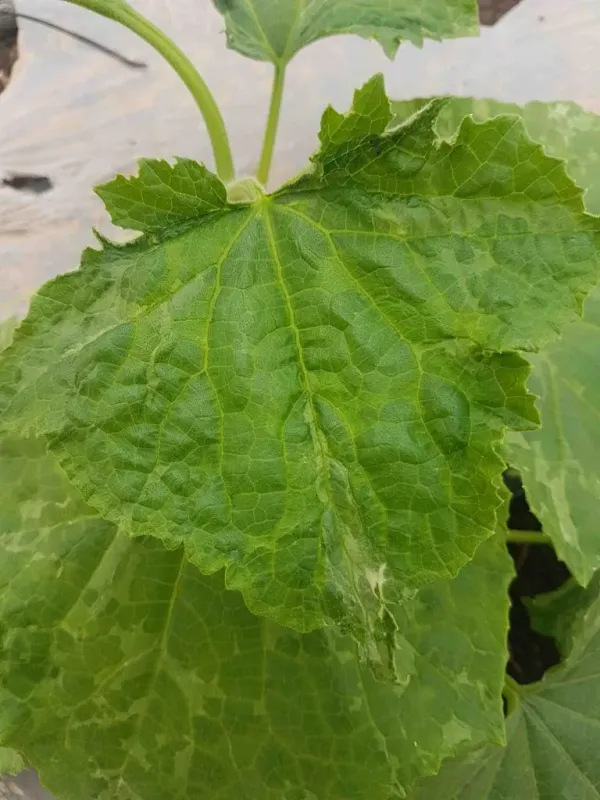
The hallmark symptom is a mosaic pattern on leaves, consisting of alternating patches of light green and dark green tissue. Leaves often appear mottled, crinkled, or distorted.
Affected plants exhibit severe stunting and reduced internode length, leading to a bushy, dwarfed appearance. Growth of new shoots is often stunted or completely arrested.
Fruit symptoms are highly characteristic and include severe mottling, surface bumpiness, and irregular shape. In many cases, the fruits become stunted and unmarketable.
Flower development can be abnormal, often showing signs of chlorosis or deformed petals. A significant reduction in flower count and fruit set is frequently observed during heavy infections.
In advanced stages of infection, plants show general chlorosis, downward curling of leaves, and potential necrosis of older tissues, eventually leading to plant collapse.
Pathogen
Cucumber mosaic virus (CMV) is a highly pervasive plant pathogenic virus in the Cucumovirus genus. It is considered one of the most economically damaging viruses globally due to its vast host range.
The virus particles are spherical in shape and contain a tripartite single-stranded RNA genome. This structure allows for high genetic diversity and rapid adaptation to various host plants.
CMV affects a broad spectrum of plants, including vegetables like cucumbers, tomatoes, peppers, melons, and beans, as well as many ornamental garden flowers and weeds.
The virus does not persist in soil but overwinters in the seeds of weeds and in perennial root systems. These perennial hosts serve as the primary reservoir for the virus to initiate seasonal outbreaks.
Transmission occurs primarily through insect vectors, with aphids being the most common. More than 60 species of aphids can transmit the virus in a non-persistent manner.
Conditions for development
The spread of CMV is highly correlated with the activity and population density of aphid vectors. Warm temperatures generally favor both rapid aphid reproduction and virus multiplication.
The presence of weeds in and around crop fields is the most critical factor, as they provide a continuous source of infection throughout the growing season.
In protected greenhouse environments, the close proximity of plants facilitates the spread of the virus via mechanical contact or mobile insect vectors entering through vents.
Outbreaks are often exacerbated by poor field hygiene, such as leaving diseased plant debris in the field or failing to manage volunteer crop growth after harvest.
Stressed plants with poor nutrition or irrigation management are often more susceptible to the impact of the viral load, showing more severe symptoms than healthy plants.
Why it matters
Because CMV causes systemic infection, there are no curative treatments available. Once a plant is infected, the virus spreads throughout its entire vascular system.
The virus disrupts normal photosynthesis and nutrient transport, leading to a massive decline in yield and the overall quality of the harvest.
Marketable yield is severely reduced due to fruit distortion, size reduction, and altered chemical composition, which often ruins the culinary value of the produce.
The virus can wipe out a significant portion of production in a single season, leading to substantial financial losses for growers and requiring intensive management efforts.
Infected fields serve as a dangerous source of inoculum for neighboring crops, which can perpetuate the infection cycle in the local agricultural ecosystem for years.
Protection
Management of CMV relies heavily on exclusion and prevention. Since no pesticides can kill the virus, control measures must focus on disrupting its transmission pathways.
Rigorous weed control in and around fields is essential to eliminate reservoirs where the virus persists during the winter months and between crop cycles.
The use of insecticides to manage aphid populations is a standard practice, though difficult because non-persistent transmission happens very quickly upon insect feeding.
Sanitation practices, including the removal of infected plants early in the season and the disinfection of tools used during pruning or harvesting, are critical for slowing spread.
- Select virus-resistant varieties and F1 hybrids
- Use certified virus-free seeds for planting
- Implement crop rotation with non-host plants
- Employ reflective mulches to deter aphid landing
- Maintain strict hygiene during field maintenance
Discussion
No discussions yet — be the first.