
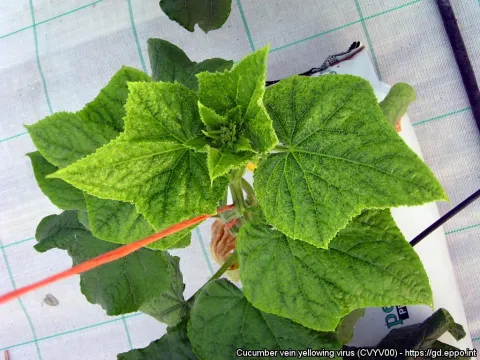
Cucumber vein yellowing
Ipomovirus cucumisvenaflavi
The causative agent of the disease is the Cucumber vein yellowing virus (CVYV), which belongs to the Ipomovirus genus within the Potyviridae family.
What the section contains
Cucumber vein yellowing
This is a plant-pathogenic virus with a single-stranded RNA genome that causes systemic infection in various cucurbit plants.
As an obligate parasite, the virus relies entirely on the metabolic processes of the host plant to replicate its own genetic code.
The viral particles are characterized by filamentous morphology, which allows for efficient movement through the plant's vascular system.
Genetic diversity among CVYV strains creates significant challenges for breeders attempting to develop resistant cucumber varieties.
The primary symptom is the yellowing of the veins on young leaves, which eventually develops into a distinct chlorotic network pattern.
As the infection advances, the yellowing spreads across the entire leaf surface, often resulting in severe leaf crinkling and distortion.
Infected plants exhibit stunted growth and shortened internodes, leading to a compact and unhealthy overall appearance of the vine.
Flowering and fruit set are drastically reduced, as the virus disrupts the energy production necessary for reproductive development.
Fruit that manages to develop is frequently misshapen, discolored, and lacks the proper nutritional and sensory quality expected of healthy cucumbers.
The virus is primarily transmitted by the whitefly Bemisia tabaci, which acts as the main vector in both greenhouse and field environments.
The transmission is semi-persistent, meaning the whitefly can acquire the virus after brief feeding and immediately transmit it to healthy plants.
Warm temperatures, particularly those above 25°C, promote rapid whitefly reproduction and facilitate the spread of the virus across the crop.
Greenhouse environments with high humidity provide optimal conditions for both the insect vector and the rapid multiplication of viral particles.
The movement of contaminated plant materials and the presence of infected weed hosts are major factors contributing to the widespread distribution of the virus.
The economic impact of this disease is severe, often resulting in massive yield losses for greenhouse cucumber producers worldwide.
Infected plants become completely unproductive, leading to total failure of commercial harvests in heavily infested areas.
The degradation of fruit quality makes the produce unmarketable, causing substantial financial losses for agricultural enterprises.
Because there is no curative treatment once a plant is infected, the entire plant must be destroyed to prevent further spreading within the greenhouse.
The cost of intensive pest management required to mitigate the spread often adds significant overhead to the production cycle.
The most effective strategy is the rigorous control of whitefly populations through the integrated use of chemical and biological controls.
Regular monitoring of plant health and the immediate removal of any suspected plants are critical steps in preventing an outbreak.
Sanitation practices, including the eradication of weeds near production facilities, reduce potential reservoirs for the virus.
Physical exclusion methods, such as installing high-density insect screens on vents, are highly effective at preventing whitefly entry.
- Utilizing resistant or tolerant cucumber cultivars.
- Deploying yellow sticky traps for early detection of whiteflies.
- Implementing strict quarantine protocols for new plant materials.
- Training staff to recognize symptoms for early intervention.