
Cucurbit leaf curl virus
Begomovirus cucurbitaphilippinense
Cucurbit leaf curl virus is caused by members of the Begomovirus genus, which are transmitted exclusively by the whitefly Bemisia tabaci. These viruses are characterized by a circular, single-stranded DNA genome.
What the section contains
Cucurbit leaf curl virus
The virus circulates within the whitefly vector, meaning that once a whitefly ingests the virus by feeding on an infected plant, it remains a carrier for the remainder of its lifespan.
Unlike some other plant viruses, it cannot be transmitted mechanically through pruning tools or contact between plants, making insect control the primary focus of management.
The virus persists in various weed hosts, providing a continuous source of inoculum that can initiate outbreaks when environmental conditions favor vector activity.
As a phloem-limited virus, it disrupts the plant's ability to transport nutrients, leading to systemic physiological collapse.
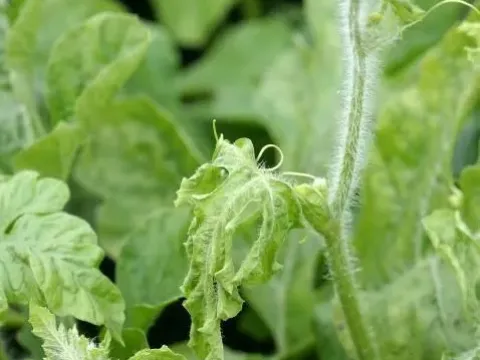
The earliest symptoms include vein clearing and yellowing of the leaf tissue, followed by upward or downward curling of leaf margins.
Affected plants exhibit significant stunting and interveinal chlorosis, which gives the foliage a thickened, leathery, and brittle appearance.
Internodes become severely shortened, causing the plant to develop a compact, bushy appearance rather than its normal trailing or climbing habit.
Fruit set is drastically reduced, and any fruits that do develop are often malformed, smaller than average, and of poor market quality.
In severe infections, the plant may cease production entirely, with reproductive parts failing to develop properly.
The epidemiology of the disease is strictly tied to the life cycle and migration patterns of the silverleaf whitefly populations in the region.
Warm, dry temperatures significantly accelerate the developmental rate of whiteflies, leading to exponential increases in population density during the summer months.
The presence of abandoned fields or weed-infested areas adjacent to commercial crops acts as a reservoir for both the virus and its insect vector.
Poorly managed irrigation and fertilization can stress plants, making them more susceptible to the physiological impacts of the viral infection.
Movement of infested transplants from one geographic area to another is a primary method of long-distance virus dispersal.
The virus causes permanent damage to the vascular tissues, meaning that infected plants cannot recover, even if the insect population is removed.
Crop losses can be devastating, often resulting in total abandonment of a field due to the lack of marketable fruit.
The combined stress of viral infection and whitefly feeding often attracts secondary pests, such as aphids, and encourages the growth of sooty mold.
Small-scale farms and organic growers are particularly at risk as they may have fewer chemical tools available for intensive whitefly suppression.
Global trade and climate change are expanding the range of the whitefly vector, threatening cucurbit production in previously unaffected latitudes.
Management must focus on a robust Integrated Pest Management (IPM) program centered on aggressive control of whitefly populations throughout the season.
Sanitation is critical; all weeds that may serve as host plants must be removed from the field and surrounding areas to reduce the potential virus reservoir.
Using certified, virus-free transplants is the most effective way to prevent the initial introduction of the pathogen into a clean field.
Monitoring using yellow sticky traps is essential for detecting early migration of whiteflies and timing insecticide applications correctly.
- Use reflective mulches to deter whitefly landings on young plants.
- Implement host-free periods to break the reproductive cycle of the vector.
- Rogue and destroy infected plants immediately upon symptom identification.
- Rotate chemical classes to prevent the development of insecticide resistance in whiteflies.