
Cucurbit leaf curl virus
Begomovirus cucurbitae
Cucurbit leaf curl virus (CLCV) is a member of the genus Begomovirus, family Geminiviridae. These are single-stranded DNA viruses known for causing severe diseases in various horticultural crops.
What the section contains
Cucurbit leaf curl virus
The virus is exclusively transmitted by the sweetpotato whitefly (Bemisia tabaci). It is not mechanically transmitted or seed-borne, meaning management must focus on controlling the insect vector.
Once introduced into the plant tissue, the virus moves through the phloem. It interferes with normal hormonal signaling in the plant, leading to stunted growth and developmental abnormalities.
The virus persists in reservoir hosts, including various weeds that belong to the Cucurbitaceae and Malvaceae families, allowing it to survive between crop seasons.
The rapid evolution of the virus genome poses a continuous challenge for plant breeders, as the pathogen frequently adapts to new host environments and conditions.
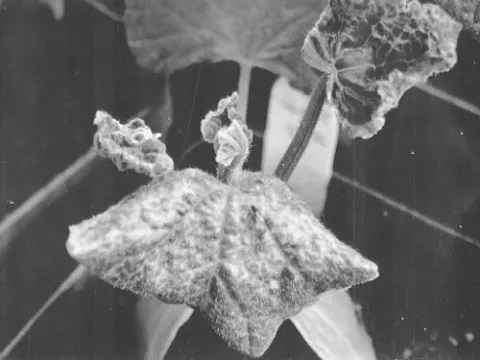
The most prominent symptom is the upward curling of young leaves at the growing tip, giving the plant a distorted and stressed appearance.
Chlorosis is frequently observed, with leaves turning yellow or showing mottled patterns. The veins may become swollen and prominent as the infection progresses.
Internode shortening is a hallmark of the disease, resulting in a bushy, rosette-like growth habit at the top of the stem, often described as 'stunting'.
Flower production is severely inhibited. If fruits are formed, they are typically small, distorted, and economically unviable for the fresh market.
The entire plant eventually loses its vigor, stops growing prematurely, and provides little to no harvestable yield after becoming infected.
The prevalence of the virus is strictly correlated with the population density of the whitefly vector in the field or greenhouse.
Warm and dry weather conditions are ideal for whitefly reproduction and migration, significantly increasing the likelihood of rapid virus spread across a field.
Presence of surrounding weeds serves as a vital refuge for both the virus and the whiteflies, creating a continuous infection cycle in the agricultural landscape.
High nitrogen fertilization rates encourage lush, succulent growth, which is highly attractive to whiteflies, thus promoting higher infestation and transmission rates.
The lack of adequate crop rotation or the presence of year-round cucurbit production in the same area promotes the buildup of the viral inoculum in the environment.
The virus causes severe yield losses because infected plants become unproductive shortly after being colonized by the whitefly vector.
Loss of product quality is a major issue; deformed or undersized fruits fail to meet commercial standards and often cannot be sold.
Farmers face significant financial strain due to the high cost of whitefly control measures, which are often ineffective once the virus is established in the population.
Total crop failure can occur if the infection strikes at the seedling stage, requiring complete re-planting and additional operational costs.
The virus can affect all members of the Cucurbitaceae family, such as melons, cucumbers, and squashes, limiting the options for farmers in affected regions.
Managing the whitefly population through integrated pest management (IPM) is the most effective way to limit the spread of the virus.
Maintaining a separation distance between newly planted crops and older, potentially infested fields can significantly reduce the risk of vector migration.
Physical barriers, such as insect-proof screens in greenhouses, are highly recommended to prevent whitefly entry and viral transmission.
Rigorous weed control on field margins is necessary to remove reservoir hosts that harbor both the virus and the insect vector.
- Monitor whitefly populations using yellow sticky cards regularly.
- Apply systemic and contact insecticides rotated by mode of action.
- Rogue out and destroy symptomatic plants as soon as they are identified.